
Top 3 Recommended Policies

By: Jackson Hering
Licensed Personal Insurance Specialist
425-409-2497
A single slip on a wet pathway, a misplaced burial record, or a storm that topples mature trees can turn a peaceful Washington cemetery into the center of a costly claim. Cemetery owners and managers juggle grieving families, aging infrastructure, and increasing use of technology, often on tight budgets. At the same time, the cemetery services industry in Washington is projected to reach more than one hundred fifteen million dollars in revenue with over one hundred forty establishments and several hundred employees, according to IBISWorld analysis of the state’s cemetery services sector. That level of economic activity draws regulatory attention, higher expectations from families, and more potential for claims when something goes wrong.
This guide walks through the coverage foundations that help protect Washington cemeteries from financial shocks. It looks at liability around visitors and burials, property and equipment exposures, employment risks, and newer issues tied to software, online records, and interactive memorial experiences. The goal is practical: to give cemetery operators a clear, Washington-focused roadmap they can use when reviewing current insurance or planning coverage for a new or expanding property.
Washington’s Cemetery Industry And Risk Landscape
Cemeteries in Washington range from historic hillside grounds overlooking the water to modern memorial parks on the edge of the suburbs. Some are operated by municipalities or religious organizations, others by private companies or family-owned firms. No matter the ownership structure, all share a sensitive role: caring for human remains and the memories attached to them, often for more than one generation of a family.
Recent consumer research shows that public confidence in the funeral and cemetery profession has been improving, with a majority of surveyed consumers rating the profession positively and that share climbing over time according to The Foresight Companies’ national study of more than several thousand consumers. For Washington operators, this rising trust comes with higher expectations for professionalism, transparency, and service. A coverage program that supports those expectations reduces stress when a family raises a concern or a service does not go as planned.
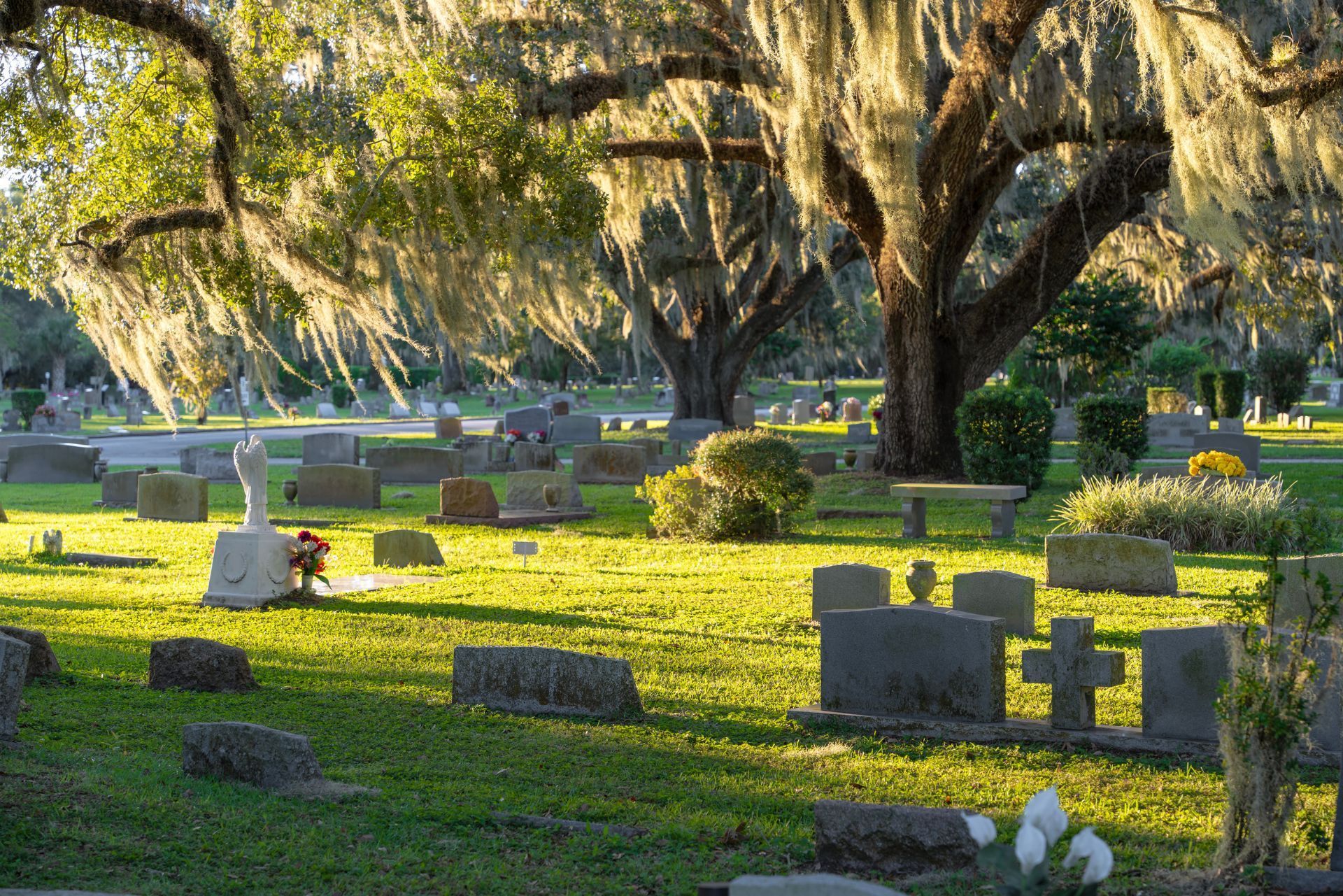
The physical setting in Washington adds another layer of risk. Heavy rain can saturate grounds and destabilize headstones. Wind and ice can bring down trees or branches. Coastal and hillside cemeteries may face soil movement or erosion. Many sites are also open to the public from dawn to dusk, sometimes without staff on every path, which increases the chance of slips, trips, falls, or vandalism. Insurance for a Washington cemetery has to account for this mix of natural, operational, and reputational exposures.

Why Washington Cemeteries Need Strong Business Coverage
Cemeteries often feel quiet and predictable, yet from an insurance perspective they are busy service businesses that host visitors, handle sensitive records, operate vehicles and heavy equipment, and sometimes offer additional services such as cremation or on-site events. A single serious incident can quickly exceed what many small or mid-sized operators can comfortably pay out of pocket.
Liability is one of the clearest concerns. Visitors may walk on uneven ground, wet grass, or cracked pavement. Family disputes can escalate into allegations about burial rights or recordkeeping. In some cases, mistakes in plot sales or burials can trigger both financial claims and emotional distress, which raises the stakes. Without thoughtful liability coverage, even defending against an unfounded claim can become a major financial strain.
Property exposures are just as significant. Cemeteries maintain roads, irrigation systems, office buildings, maintenance sheds, and often specialized equipment such as backhoes, mowers, and stone-cleaning tools. Storms, fires, theft, and vandalism can damage these assets. While the land itself may not be insurable in a traditional way, the structures and equipment on that land certainly are. Repairs can be costly and, if delayed, can hurt the appearance and safety of the grounds.
Employment and operational risks round out the picture. Grounds crews face physical hazards. Administrative staff handle sensitive personal and financial data. Volunteers sometimes assist with grounds work or events. Each of these roles presents different potential for injury, privacy incidents, or miscommunication with families. Robust coverage helps a cemetery honor its commitments even when the unexpected happens.
Core Insurance Policies For Washington Cemetery Businesses
Every cemetery is unique, yet certain insurance policies appear in almost every well-designed program. These coverages work together to protect the business when someone gets hurt, property is damaged, or a burial, record, or service is called into question. Understanding what each one does makes it easier to have productive conversations with brokers and carriers.
The policies below form the backbone of coverage for many Washington cemeteries. Each section focuses on why the coverage matters, common claim scenarios, and practical points to consider when choosing limits and options. Adjustments can always be made for size, ownership structure, and the specific services the cemetery offers.
General Liability And Premises Protection
General liability insurance is often the starting point for a cemetery. It typically responds when a third party alleges bodily injury, property damage, or certain types of personal injury, such as libel, arising from the cemetery’s operations. In simple terms, it is the policy that comes into play if a visitor is injured on the grounds or claims that the cemetery’s actions damaged their property.
Common scenarios include visitors slipping on wet surfaces, tripping over uneven walkways, or being struck by falling branches. Headstones can be damaged by equipment, or vehicles might collide in parking areas. A cemetery with open gates and regular visitors cannot completely eliminate these risks, but it can make sure it has coverage for medical bills, legal defense, and settlements when incidents occur.
When selecting liability limits, operators often think about both the size of their property and the number of people who visit in a typical week or season. Sites that host large ceremonies, public events, or historically significant memorials may draw higher traffic and, with it, higher exposure. Discussing visitor counts, special events, and any unique site features with a broker helps align liability limits with the real-world risk.
Commercial Property And Equipment Coverage
Property insurance covers buildings, contents, and often business personal property, such as office furniture, computers, tools, and maintenance equipment. For cemeteries, this may include offices, chapels, maintenance garages, storage sheds, and sometimes columbariums or mausoleums, depending on how the policy is structured.
In practice, many cemetery claims relate to weather, fire, or theft. Windstorms can damage roofs, fences, and signage. Lightning or electrical faults can start fires in maintenance buildings where flammable materials are stored. Thieves may target equipment, copper, or other metal components. Property coverage can pay to repair or replace what is damaged, so operations can resume quickly and families see minimal disruption.
It is worth paying close attention to coverage for specialized items such as monuments, statuary, and stained glass. Some policies offer limited automatic coverage, while others require specific scheduling or endorsements. A cemetery with prominent historical monuments, intricate memorial art, or a distinctive chapel interior should raise these details early in the coverage discussion.
Professional Liability For Cemetery Operations
Professional liability, sometimes called errors and omissions coverage, addresses claims that the cemetery made a mistake in how it provided professional services. For a cemetery, that might involve allegations of selling the wrong plot, burying in the wrong location, mishandling remains, miscommunicating grave locations, or providing inaccurate records.
Even when an error is small and can be corrected, families may feel deeply hurt or angry, given the emotional weight of burial decisions. Lawsuits in this area often seek both direct costs and compensation for emotional distress. Professional liability coverage helps pay for legal defense and settlements or judgments when a service error leads to a claim.
Because professional mistakes are closely tied to recordkeeping, mapping, and communication, cemeteries that rely heavily on software or digital databases should make sure their professional liability coverage is coordinated with any cyber or data breach protection. Gaps between policies can cause problems if a claim involves both a service mistake and an underlying technology failure.
Workers Compensation And Employer Liability
Grounds crews and maintenance staff work with heavy equipment, chemicals, and uneven terrain. Office staff may face ergonomic strains or stress-related injuries. Workers compensation insurance helps pay for medical care and lost wages when employees are injured or become ill because of their work, as required by state law.
In addition to statutory workers compensation benefits, many cemeteries carry employer liability coverage, often bundled with workers compensation. This coverage can respond to certain lawsuits from employees who allege that an employer’s negligence led to their injury. Even with strong safety practices and training, these claims can arise, and having appropriate coverage protects both the business and its staff.
Washington cemeteries that use seasonal workers, volunteers, or contractors should be careful about classification. Misunderstandings about who counts as an employee can lead to unexpected coverage gaps or disputes with insurers. Clear agreements, accurate payroll reporting, and regular reviews with a broker reduce surprises.
Commercial Auto And Mobile Equipment
Many cemeteries operate vehicles such as pickup trucks, vans, or small utility vehicles for grounds work and family assistance. Commercial auto insurance typically covers liability for injuries or property damage caused by these vehicles, along with physical damage coverage if they are stolen or damaged in a crash.
Some equipment, such as backhoes or tractors, may travel on public roads or move between properties. Depending on how they are titled and used, these may need to be insured under commercial auto policies, inland marine policies, or both. Clarifying how and where equipment is transported helps avoid disputes at claim time.
Even when a cemetery does not own many vehicles, it may still have exposure from employees using personal vehicles for work, such as delivering documents, picking up supplies, or meeting with families off-site. Hired and non-owned auto coverage can be an important supplement in these situations.
Technology, Cemetery Software, And Emerging Risks
Cemeteries and memorial parks across the country are moving from paper maps and index cards to digital records, interactive maps, and online portals. Industry analysts note that the global cemetery software market is projected to grow from several hundred million dollars in annual revenue to more than one billion dollars within about a decade, based on forecast data compiled by Wise Guy Reports on cemetery software demand. For Washington operators, this trend brings convenience and better service, but also new classes of risk.
Many cemetery software platforms now integrate with mapping tools, including Geographic Information Systems, to show precise grave locations and pathways on digital maps. Reports on the software market describe how this integration has improved administrative efficiency and customer experience by making it easier to find plots and visualize grounds, as highlighted in industry research on cemetery management software and GIS mapping. When a cemetery relies on digital mapping and databases, however, a system failure or data error can quickly turn into a professional liability or reputational issue.
Some cemeteries are experimenting with augmented reality or virtual reality experiences that allow visitors to access stories, images, or historical information by scanning markers or using mobile devices. Market analysts have reported that these immersive experiences can significantly increase visitor engagement, with some sites seeing engagement rise by a notable percentage after adding AR or VR options, according to global cemetery service market research on AR and VR adoption. Those same tools may collect visitor data, rely on wireless networks, or depend on third-party app providers, all of which introduce cyber and privacy considerations.
From an insurance standpoint, cemeteries using software and digital services should evaluate cyber liability coverage, data breach response coverage, and coverage for digital assets. It is also important to look at how technology vendors’ contracts allocate risk. When a plot mapping error stems from a software glitch, for example, the cemetery may still be the one facing the family, even if the vendor shares some responsibility in the background.
Designing A Coverage Strategy For Your Washington Cemetery
Building the right coverage mix starts with an honest look at the cemetery’s operations, history, and future plans. Two cemeteries on opposite sides of Washington might look similar from the road, yet one may focus on traditional burials and quiet visitation, while the other hosts frequent services, community events, and a high volume of online traffic through its website and portals. Each needs coverage tailored to how it actually operates.
A useful first step is to map out key exposures in everyday language. This can include visitor safety, burial accuracy, grounds and building maintenance, vehicle use, data and records management, employee safety, and any special activities such as tours or memorial events. For each exposure, the cemetery can ask what could realistically go wrong and how costly that event might be if insurance did not help absorb the blow.
After risks are outlined, it becomes easier to match them to coverages and policy limits. A cemetery with heavy foot traffic and older infrastructure may prioritize strong liability and property limits. One that is heavily invested in technology, online pre-need sales, and digital records may place more emphasis on cyber, professional liability, and business interruption coverage. Operators should also think about succession and long-term maintenance obligations, since claims can arise many years after a burial or plot sale.
Working with a broker or advisor who understands cemetery and funeral businesses can be invaluable. These specialists are more familiar with the subtle distinctions between cemetery, funeral home, and crematory operations, and they tend to know where claims commonly arise. They can also help explain carrier appetites, endorsements that matter for cemeteries, and how underwriters evaluate things like maintenance logs, training procedures, and complaint handling.
Coverage Considerations For Different Types Of Cemeteries
Not all Washington cemeteries operate under the same model. Municipal cemeteries answer to city or county leadership and, in some cases, self-insured pools. Religious cemeteries may fall under the insurance programs of a wider faith organization. Privately owned parks might be part of regional groups or stand-alone businesses. Natural or green burial grounds have their own set of environmental and community expectations.
Each model has a distinct risk profile, even when basic activities such as plot sales and grounds maintenance look similar. Ownership structure affects who is legally responsible when something goes wrong, who controls risk management decisions, and how claims are handled. A clear picture of the cemetery’s governance and stakeholders helps ensure coverage is placed correctly and that limits reflect the organization’s resources and risk tolerance.
The table below summarizes some common cemetery types and coverage emphasis areas. It is not exhaustive, but it can spark useful questions as Washington operators compare their own situation to these broad categories.
| Cemetery Type | Typical Characteristics | Coverage Focus Areas |
|---|---|---|
| Municipal or County Cemetery | Operated by local government, often with public works support and political oversight. | Coordination with municipal risk pools, clear liability coverage for visitors, property coverage for shared facilities, and careful handling of civil rights or public access claims. |
| Religious or Faith-Based Cemetery | Owned or overseen by a church, synagogue, mosque, or denomination, sometimes next to a house of worship. | Integration with broader church insurance programs, protection for volunteers, attention to counseling or pastoral services, and clarity on shared property and liability with the worship facility. |
| Privately Owned Memorial Park | For-profit or family-owned operation with dedicated staff and marketing, often offering a wide range of memorial options. | Robust general and professional liability, business income protection, cyber and data coverage, vehicle and equipment insurance, and management liability for owners and directors. |
| Natural or Green Burial Ground | Focus on minimal environmental impact, native landscaping, and simpler markers or no markers at all. | Premises liability for trails and natural features, environmental considerations, communication about burial locations and rules, and coverage for community events or educational programs. |
| Cemetery With On-Site Crematory | Offers cremation services in addition to interment, often with specialized equipment and regulatory requirements. | Specialized professional liability for handling remains, equipment breakdown coverage, pollution or emission concerns, and potentially higher property and liability limits. |
Even within these broad categories, individual cemeteries may have unique elements that drive coverage needs. A historic cemetery that hosts frequent tours and school programs, for instance, will weigh event liability differently than a quiet rural burial ground that rarely sees visitors outside service times. Talking through these operational nuances with an insurance professional helps avoid a one size fits all approach that leaves important gaps.
Frequently Asked Questions About Washington Cemetery Business Insurance
Cemetery managers and board members often share similar questions about how insurance fits into their day-to-day responsibilities. The answers below address some of the issues that come up most often during coverage reviews and renewal discussions.
Do small rural cemeteries in Washington really need the same coverages as large memorial parks?
Not necessarily. Smaller cemeteries sometimes have lower visitor counts and fewer structures, which can reduce certain exposures, yet they still face core risks such as visitor injuries, burial errors, and weather damage. Even a modest liability claim or equipment loss can be a serious financial strain for a small operation, so the key is right-sizing limits and deductibles rather than skipping major coverage types altogether.
How does public perception of the cemetery profession affect insurance decisions?
As more consumers report positive views of funeral and cemetery professionals, as reflected in national research where a growing majority rate the profession favorably over time according to The Foresight Companies’ consumer attitudes report, expectations for service quality and accountability also rise. Insurers and regulators pay attention to these trends, which can influence underwriting questions, documentation requirements, and how aggressively claimants pursue compensation when something goes wrong.
Is cyber insurance really necessary for a cemetery that only uses basic management software?
Any cemetery that stores customer data, payment information, or burial records in digital form has some level of cyber risk. Even simple systems can be compromised through stolen passwords, lost devices, or vendor outages. A well-structured cyber policy can help with notification costs, credit monitoring, data recovery, and legal defense if information is exposed or systems become unavailable at a critical moment.
What should a cemetery do before shopping for new or expanded coverage?
It helps to gather recent loss history, site maps, maintenance logs, contracts with vendors, and a clear description of services offered, including any use of software, online portals, or interactive memorial tools. Being ready with this information makes it easier for an insurance professional to understand the real risk picture and to negotiate better terms on the cemetery’s behalf.
How often should a Washington cemetery review its insurance program?
An annual review is a practical minimum, especially if the cemetery is adding new sections, changing pricing or burial options, introducing new technology, or expanding services. Significant events such as a major claim, leadership change, or capital project can also be good prompts to revisit coverage, even if they fall between regular renewal dates.
Can insurance help with reputational damage after a high profile incident?
Certain policies, such as some professional liability or cyber policies, may include coverage for public relations or crisis management services following a covered incident. While no policy can fully undo reputational harm, having support to manage communications, respond to media inquiries, and reassure families can make a meaningful difference when an incident attracts public attention.

About The Author:
Jackson Hering
I'm a fourth-generation insurance agent, having learned the business firsthand while working alongside my father. With years of experience passed down through my family, I take pride in combining that legacy knowledge with a modern, client-focused approach. I started my career at a small, family-owned agency and worked my way up, gaining a deep understanding of the industry from the ground up.
Contact Us
Coverage for Everyday Life
Personal Insurance That Works for You
We help individuals and families find coverage that keeps life moving—without overpaying or getting lost in fine print. From auto and home insurance to umbrella and life protection, our licensed team compares options across top-rated carriers to make sure you’re covered the right way, right now.
Auto Insurance
Drive with confidence and coverage that fits your needs.
Home Insurance
Coverage for fire, theft, liability, and more.
Renters Insurance
Affordable protection for your belongings and personal liability.

Boat Insurance
Coverage for watercraft damage, liability, and gear.
Life Insurance
Prepare for the future with term or whole life policies.
Umbrella Insurance
Extra liability protection for life’s bigger risks.
Protect Your Business Without the Guesswork
Business Insurance Built for Stability & Growth
Running a business comes with risk. We help reduce it. Our team builds custom coverage for your needs, including general liability, property, commercial auto, and cyber protection. We’re fast, responsive, and easy to reach—so your insurance is one less thing to worry about.
Industries We Serve
Tailored by Industry
We understand the risks unique to your business—and how to insure against them.
Contractors & Trades
We help contractors protect their tools, vehicles, job sites, and employees with comprehensive insurance solutions. Whether you’re a general contractor, electrician, plumber, or another trade, we provide the coverage you need to keep your projects moving forward safely.
Cannabis Industry
Mosaic specializes in insuring the unique risks of the cannabis industry, including growers, retailers, processors, and delivery services. We understand the compliance challenges you face and work with carriers who can protect every stage of your operation.


Lessor’s Risk (LRO)
If you own a building and lease space to commercial tenants, we help protect your property and liability as a landlord. Our policies safeguard your investment from damages, lawsuits, and other risks that come with leasing commercial real estate.

Frequently Asked Questions
Quick Answers. Trusted Support.
Insurance doesn’t have to be confusing. We’re here to make everything clear, helpful, and hassle-free.
What states is Mosaic Insurance licensed in?
Mosaic is licensed in more than 10 states, including Washington, Oregon, Arizona, California, Texas, Colorado, and more. Our team can help you whether you live locally in WA or operate across multiple state lines.
We’re especially well-equipped to help clients with multi-state businesses, real estate portfolios, or cannabis operations that need compliance-ready coverage in various jurisdictions.
Can I get quotes from multiple carriers through Mosaic?
Yes. As an independent agency, we partner with a wide range of top-rated insurance carriers. That means you’re not locked into just one company’s pricing or coverage limitations.
Our advisors compare quotes for you, break down the differences, and help you choose the plan that fits best—no pressure, just honest advice.
Does Mosaic offer cannabis insurance, and who qualifies?
Absolutely. Mosaic is one of the few agencies with deep experience in cannabis insurance. We offer coverage for dispensaries, cultivators, delivery services, manufacturers, and labs.
If you're in a licensed state and need coverage that meets regulatory requirements, we can help set you up with carriers who understand the cannabis industry’s unique risks.
What can I do through the client portal?
You can use our 24/7 client portal to request policy changes, submit certificates of insurance, and manage your billing. It’s easy to use and always available.
This helps speed up business tasks and gives you full access to your coverage—even outside of regular office hours.
What should I expect after requesting a quote?
Once you request a quote, our team will reach out to gather a few key details. From there, we shop coverage with multiple carriers and return with clear, personalized options.
We make it easy to compare policies, ask questions, and finalize your protection—usually in 24–48 hours.
Can Mosaic help me file a claim?
Yes. Whether it’s an auto accident, property damage, or business-related issue, we’re here to guide you through the claims process. Our team can explain your coverage, contact the carrier, and help get things moving quickly.
We’re your advocate—before, during, and after a claim. You don’t have to go it alone.
Tips, News & Insights
Explore Our Blog