Washington Artisan Contractor Commercial Auto Insurance

or call us: 425-320-4280
Top 3 Recommended Policies

By: Jackson Hering
Licensed Personal Insurance Specialist
425-409-2497
A single rear-end collision on I-5 during a morning commute can sideline your plumbing van for weeks, leave a client without hot water, and stick you with a five-figure repair bill. For electricians, painters, HVAC techs, and other skilled tradespeople across Washington, the vehicle you drive to job sites isn't just transportation: it's your livelihood. Your truck hauls your tools, your reputation, and often your entire business. Yet too many artisan contractors assume their personal auto policy will cover them if something goes wrong on the clock. It won't. Commercial auto insurance for artisan contractors in Washington covers the specific risks that come with work trucks, hired vehicles, trailers, driver management, and tools in transit. This guide breaks down what you actually need, what it costs, and where contractors commonly get burned by coverage gaps. Whether you're a solo handyman with one pickup or a small crew running three service vans across King County, the right policy keeps you working after the worst day on the road.
Why WA Artisan Contractors Need Commercial Auto Insurance
Washington state treats business vehicle use differently than personal driving, and so does every insurance carrier. If you're hauling materials, driving between job sites, or towing a trailer loaded with equipment, your exposure profile looks nothing like a daily commuter's. A fender bender on the way to a residential remodel isn't the same as bumping a shopping cart in a parking lot, at least not in the eyes of your insurer.
Artisan contractors also face unique liability risks. Your van might be parked on a client's steep driveway. Your apprentice might be driving your second truck unsupervised. A ladder rack could come loose on Highway 99. These scenarios fall squarely into commercial territory, and a personal policy will leave you holding the bag.
Limitations of Personal Auto Policies for Business Use
Most personal auto policies contain exclusions for vehicles used in business operations. That means if you file a claim after an accident that happened while you were hauling drywall to a job, your insurer can deny it outright. The distinction often comes down to whether the vehicle was being used for "business purposes" at the time of the loss, and insurers have gotten aggressive about enforcing this line.
Personal policies also won't cover employees or subcontractors driving your vehicle. If your helper rear-ends someone in your work truck, you're personally liable with zero coverage backing you up. That's a financial exposure most small contractors can't absorb.
Washington State Minimum Requirements vs. Industry Standards
Washington requires all vehicles to carry minimum liability limits of $25,000 per person and $50,000 per accident for bodily injury, plus $10,000 for property damage. Those minimums apply to commercial vehicles too, but they're dangerously low for contractors. A single injury claim from a car accident can blow past $50,000 before you even get to property damage or legal fees.
Most insurance professionals recommend artisan contractors carry at least $500,000 in combined single-limit liability, and many general contractors require proof of $1 million before they'll let a sub on site. Washington's contractor licensing requirements tie directly to insurance verification, so running without proper coverage can cost you your license too.
Core Coverages for Your Trade Vehicle
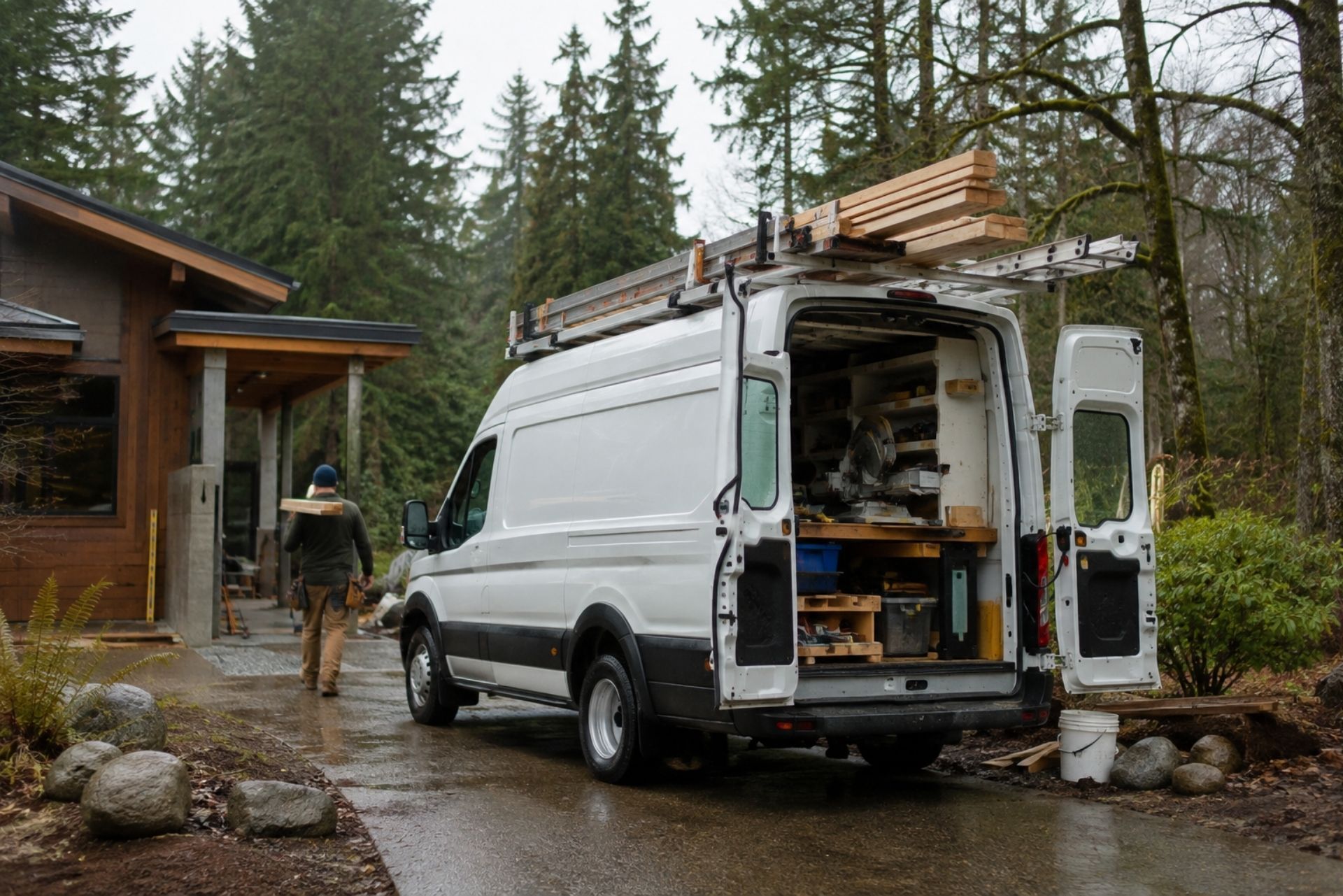
Your commercial auto policy should be built around the specific risks your trade creates. A painter's needs differ from an electrician's, and a solo operator's policy looks different from one covering a three-truck fleet. But several core coverages apply to nearly every artisan contractor in Washington.
Liability, Collision, and Comprehensive Explained
Liability coverage pays for injuries and property damage you cause to others. Collision covers damage to your own vehicle from an accident, regardless of fault. Comprehensive handles non-collision events: theft, vandalism, falling trees, hail, and the occasional deer strike on a rural highway east of the Cascades.
For most contractors, all three are essential. Your work truck likely represents a $30,000 to $60,000 investment. Skipping collision or comprehensive to save a few hundred dollars a year is a gamble that rarely pays off, especially if you're still making payments on the vehicle.
Protection for Tools and Equipment in Transit
Here's a coverage gap that catches contractors off guard: standard commercial auto policies typically don't cover the tools and equipment inside your vehicle. Your $8,000 in power tools, diagnostic equipment, or welding gear needs separate inland marine or tools-in-transit coverage. Construction equipment theft costs the industry billions annually, and thieves specifically target contractor vehicles parked at job sites and hotels overnight.
A tools-in-transit endorsement or standalone inland marine policy fills this gap. Keep a current inventory with photos and serial numbers. Without documentation, even a good policy won't pay what your tools are actually worth.
Hired and Non-Owned Auto Coverage
If you ever rent a truck for a big job, borrow a vehicle, or have employees who occasionally use their personal cars for business errands, you need hired and non-owned auto (HNOA) coverage. This protects your business when someone drives a vehicle you don't own for work purposes. Washington contractors who rent box trucks during busy seasons or send employees to pick up supplies in personal vehicles are exposed without HNOA. A
solid hired and non-owned auto policy is one of the most affordable add-ons you can get, often running just a few hundred dollars per year.
Comparison: Personal vs. Commercial Auto Coverage
Understanding the gap between personal and commercial coverage makes the decision straightforward. The differences aren't subtle: they're the difference between a denied claim and a covered one.
Coverage Comparison Table
| Feature | Personal Auto | Commercial Auto |
|---|---|---|
| Business use covered | No (excluded or limited) | Yes, primary purpose |
| Employee drivers | Not covered | Covered under policy |
| Tools/equipment in vehicle | Not covered | Available via endorsement |
| Hired/rented vehicles | Not covered | HNOA endorsement available |
| Trailer coverage | Limited or none | Can be scheduled on policy |
| Typical liability limits | $50K-$100K | $500K-$1M+ |
| Monthly cost (WA average) | $120-$200 | $250-$400 |
| Covers multiple drivers | Named drivers only | All authorized employees |
The monthly cost difference is real but manageable. Light-duty contractor vehicles in Washington
average between $250 and $400 per month for commercial coverage as of mid-2026. That's the price of keeping your business protected against a single bad day on the road.
Your commercial auto premium isn't a flat rate. Insurers weigh dozens of variables, and understanding which ones you can control helps you manage costs without cutting coverage.
Vehicle Type and Specialty Modifications
A standard half-ton pickup costs less to insure than a one-ton dually with a custom service body, ladder racks, and a mounted generator. Specialty modifications increase both the replacement cost and the liability profile of your vehicle. Heavier trucks cause more damage in accidents, which means higher liability premiums.
Telematics devices are becoming a practical way to offset some of these costs. Fleet tracking technology that meets insurer telematics standards can earn discounts of 5% to 15% on commercial auto premiums. GPS tracking also helps recover stolen vehicles and monitor driving habits across your crew.
Driving Records and Employee Risk Levels
Your driving record matters, but so do the records of every employee you put behind the wheel. One driver with a DUI or multiple at-fault accidents can spike your entire policy's cost. Run motor vehicle reports (MVRs) on every employee before handing them keys, and recheck annually.
Insurers in Washington are also watching broader market trends. Auto insurance rates are projected to climb in more than half the country by year's end, driven by rising repair costs and more expensive vehicle technology. Locking in a policy now with a clean driving history gives you the best shot at favorable rates. Implementing a written driver safety program can also demonstrate to underwriters that you're serious about risk management, which translates to better pricing.
Common Questions About Contractor Auto Insurance
Does my personal insurance cover my work truck?
Almost certainly not for business use. If you're driving to and from job sites, hauling materials, or towing a trailer for work, your personal policy's business-use exclusion will likely result in a denied claim. Even if you added a "business use" endorsement to your personal policy, it won't cover employees, hired vehicles, or tools.
What happens if an employee crashes my van?
If you have a commercial auto policy that lists the employee as an authorized driver, your policy responds. Without commercial coverage, you're personally liable for all damages, injuries, and legal costs. This is one of the most common and expensive mistakes small contractors make.
Are my expensive tools covered if the truck is stolen?
Not under a standard commercial auto policy. You need a separate inland marine or tools-in-transit endorsement. Document everything with photos, receipts, and serial numbers. Most policies cap tool coverage between $5,000 and $25,000 unless you schedule specific high-value items.
Do I need a commercial policy for just one vehicle?
Yes. The number of vehicles doesn't determine whether you need commercial coverage: the use of the vehicle does. If that one truck is used for business, it needs a commercial policy. Some
artisan contractor insurance programs are specifically designed for small operations with just one or two vehicles, making coverage accessible without fleet-sized pricing.
Making the Right Choice for Your Business
Getting the right commercial auto coverage for your contracting business in Washington isn't about buying the most expensive policy. It's about matching your coverage to your actual risks: the vehicles you operate, the employees who drive them, the tools you carry, and the trailers you tow.
Start by documenting your full exposure. List every vehicle, every driver, every piece of equipment that travels in or on your trucks. Get quotes from at least three sources: a national carrier, a regional insurer familiar with Washington's market, and an independent agent who specializes in contractor coverage. Compare not just premiums but deductibles, exclusions, and endorsement options.
Don't wait for a claim denial to find out your personal policy won't cover your work truck. The cost difference between personal and commercial auto insurance is small compared to a single uninsured accident. Protect your vehicles, your tools, your crew, and the business you've built. Talk to an agent who understands artisan contractor risks and get a policy in place before your next job.

About The Author:
Jackson Hering
I'm a fourth-generation insurance agent, having learned the business firsthand while working alongside my father. With years of experience passed down through my family, I take pride in combining that legacy knowledge with a modern, client-focused approach. I started my career at a small, family-owned agency and worked my way up, gaining a deep understanding of the industry from the ground up.
Contact Us
Coverage for Everyday Life
Personal Insurance That Works for You
We help individuals and families find coverage that keeps life moving—without overpaying or getting lost in fine print. From auto and home insurance to umbrella and life protection, our licensed team compares options across top-rated carriers to make sure you’re covered the right way, right now.
Auto Insurance
Drive with confidence and coverage that fits your needs.
Home Insurance
Coverage for fire, theft, liability, and more.
Renters Insurance
Affordable protection for your belongings and personal liability.

Boat Insurance
Coverage for watercraft damage, liability, and gear.
Life Insurance
Prepare for the future with term or whole life policies.
Umbrella Insurance
Extra liability protection for life’s bigger risks.
Protect Your Business Without the Guesswork
Business Insurance Built for Stability & Growth
Running a business comes with risk. We help reduce it. Our team builds custom coverage for your needs, including general liability, property, commercial auto, and cyber protection. We’re fast, responsive, and easy to reach—so your insurance is one less thing to worry about.
Industries We Serve
Tailored by Industry
We understand the risks unique to your business—and how to insure against them.
Contractors & Trades
We help contractors protect their tools, vehicles, job sites, and employees with comprehensive insurance solutions. Whether you’re a general contractor, electrician, plumber, or another trade, we provide the coverage you need to keep your projects moving forward safely.
Cannabis Industry
Mosaic specializes in insuring the unique risks of the cannabis industry, including growers, retailers, processors, and delivery services. We understand the compliance challenges you face and work with carriers who can protect every stage of your operation.

Lessor’s Risk (LRO)
If you own a building and lease space to commercial tenants, we help protect your property and liability as a landlord. Our policies safeguard your investment from damages, lawsuits, and other risks that come with leasing commercial real estate.

Frequently Asked Questions
Quick Answers. Trusted Support.
Insurance doesn’t have to be confusing. We’re here to make everything clear, helpful, and hassle-free.
What states is Mosaic Insurance licensed in?
Mosaic is licensed in more than 10 states, including Washington, Oregon, Arizona, California, Texas, Colorado, and more. Our team can help you whether you live locally in WA or operate across multiple state lines.
We’re especially well-equipped to help clients with multi-state businesses, real estate portfolios, or cannabis operations that need compliance-ready coverage in various jurisdictions.
Can I get quotes from multiple carriers through Mosaic?
Yes. As an independent agency, we partner with a wide range of top-rated insurance carriers. That means you’re not locked into just one company’s pricing or coverage limitations.
Our advisors compare quotes for you, break down the differences, and help you choose the plan that fits best—no pressure, just honest advice.
Does Mosaic offer cannabis insurance, and who qualifies?
Absolutely. Mosaic is one of the few agencies with deep experience in cannabis insurance. We offer coverage for dispensaries, cultivators, delivery services, manufacturers, and labs.
If you're in a licensed state and need coverage that meets regulatory requirements, we can help set you up with carriers who understand the cannabis industry’s unique risks.
What can I do through the client portal?
You can use our 24/7 client portal to request policy changes, submit certificates of insurance, and manage your billing. It’s easy to use and always available.
This helps speed up business tasks and gives you full access to your coverage—even outside of regular office hours.
What should I expect after requesting a quote?
Once you request a quote, our team will reach out to gather a few key details. From there, we shop coverage with multiple carriers and return with clear, personalized options.
We make it easy to compare policies, ask questions, and finalize your protection—usually in 24–48 hours.
Can Mosaic help me file a claim?
Yes. Whether it’s an auto accident, property damage, or business-related issue, we’re here to guide you through the claims process. Our team can explain your coverage, contact the carrier, and help get things moving quickly.
We’re your advocate—before, during, and after a claim. You don’t have to go it alone.
Tips, News & Insights
Explore Our Blog