
Top 3 Recommended Policies

By: Jackson Hering
Licensed Personal Insurance Specialist
425-409-2497
A single paving job gone wrong can cost you more than a year's worth of premiums. A roller slips off a trailer and damages a client's fence. Hot asphalt splashes onto a bystander's shoes. A freshly paved parking lot develops cracks six months after you finished the project. Each of these scenarios triggers a different type of insurance coverage, and if you don't have the right policy in place, you're paying out of pocket.
Washington State adds another layer of complexity. The state has its own workers' compensation system, specific bonding requirements, and environmental regulations that affect how paving contractors operate. Whether you're resurfacing residential driveways in Spokane or laying down commercial parking lots across the Puget Sound region, your insurance needs to match the actual risks you face on the job site.
This guide covers everything
Washington paving contractors need to know about insurance: from state-mandated requirements and
general liability to
pollution coverage, completed operations,
equipment protection, and
commercial auto policies. We'll break down what's required by law, what's smart to carry, and how to keep your premiums from eating into your margins.
Washington State Requirements for Paving Contractors
Before you bid on your first job, Washington's Department of Labor & Industries (L&I) requires you to be properly registered, bonded, and insured. Skipping any of these steps doesn't just risk fines. It can result in stop-work orders, personal liability for injuries, and even criminal penalties.
L&I Registration and Surety Bond Minimums
Every contractor working in Washington must register with L&I and maintain a surety bond. Specialty contractors, which includes most paving operations, must now carry a $15,000 surety bond, while general contractors need $30,000 under RCW 18.27. The bond protects consumers if you fail to complete a job, violate your contract, or cause property damage you refuse to fix.
Your registration also requires proof of
liability insurance and a current UBI (Unified Business Identifier) number. L&I audits these regularly, and letting your bond or registration lapse even briefly can trigger penalties. The
full list of contractor insurance requirements includes maintaining active coverage for the entire duration of your registration.
Workers' Compensation through the State Fund
Washington is one of four states that operates a monopolistic workers' compensation fund. You can't buy workers' comp from a private insurer here. Instead, you pay premiums directly to L&I based on your risk classification and payroll.
Paving contractors typically fall under high-risk classification codes due to the physical nature of the work, heavy equipment operation, and exposure to hot materials. L&I has
proposed a 2026 rate increase of 4.9% overall, though construction's average increase is closer to 3%. Your actual rate depends on your classification code, payroll size, and claims history. A clean safety record can significantly reduce what you pay through experience modification rate adjustments, which we'll cover later.
Essential Insurance Coverages for Paving Projects
State requirements are the floor, not the ceiling. A comprehensive insurance program for a Washington paving contractor covers several distinct risk categories, each triggered by different job site scenarios.
General Liability for Property Damage and Injuries
General liability (GL) is the backbone of your insurance program. It covers third-party bodily injury, property damage, and personal injury claims that arise from your operations. Think of a pedestrian tripping over equipment left near a sidewalk repair, or your crew accidentally damaging underground sprinkler lines while prepping a driveway.
Most paving contractors carry $1 million per occurrence and $2 million aggregate limits. Larger commercial projects often require $5 million or more, typically achieved by adding an umbrella or excess liability policy on top of your primary GL. Your GL policy should specifically include completed operations coverage, which protects you after you've finished a job. If a parking lot you paved develops drainage issues that flood a neighboring business six months later, completed operations responds to that claim.
Commercial Auto for Heavy Equipment Hauling
Paving operations rely heavily on trucks, trailers, and specialized vehicles. Your personal auto policy won't cover a dump truck hauling asphalt or a flatbed transporting a roller to a job site. You need a commercial auto policy that covers your entire fleet, including hired and non-owned auto coverage for situations where employees use personal vehicles for company business.
Premiums for commercial auto vary based on fleet size, driver records, and vehicle types. A small paving company with two trucks and a trailer might pay $8,000 to $15,000 annually, while a larger operation running ten or more vehicles could see premiums north of $40,000. Installing GPS tracking and dash cameras can help reduce these costs, and some carriers offer discounts for telematics programs.
Inland Marine for Pavers and Rollers
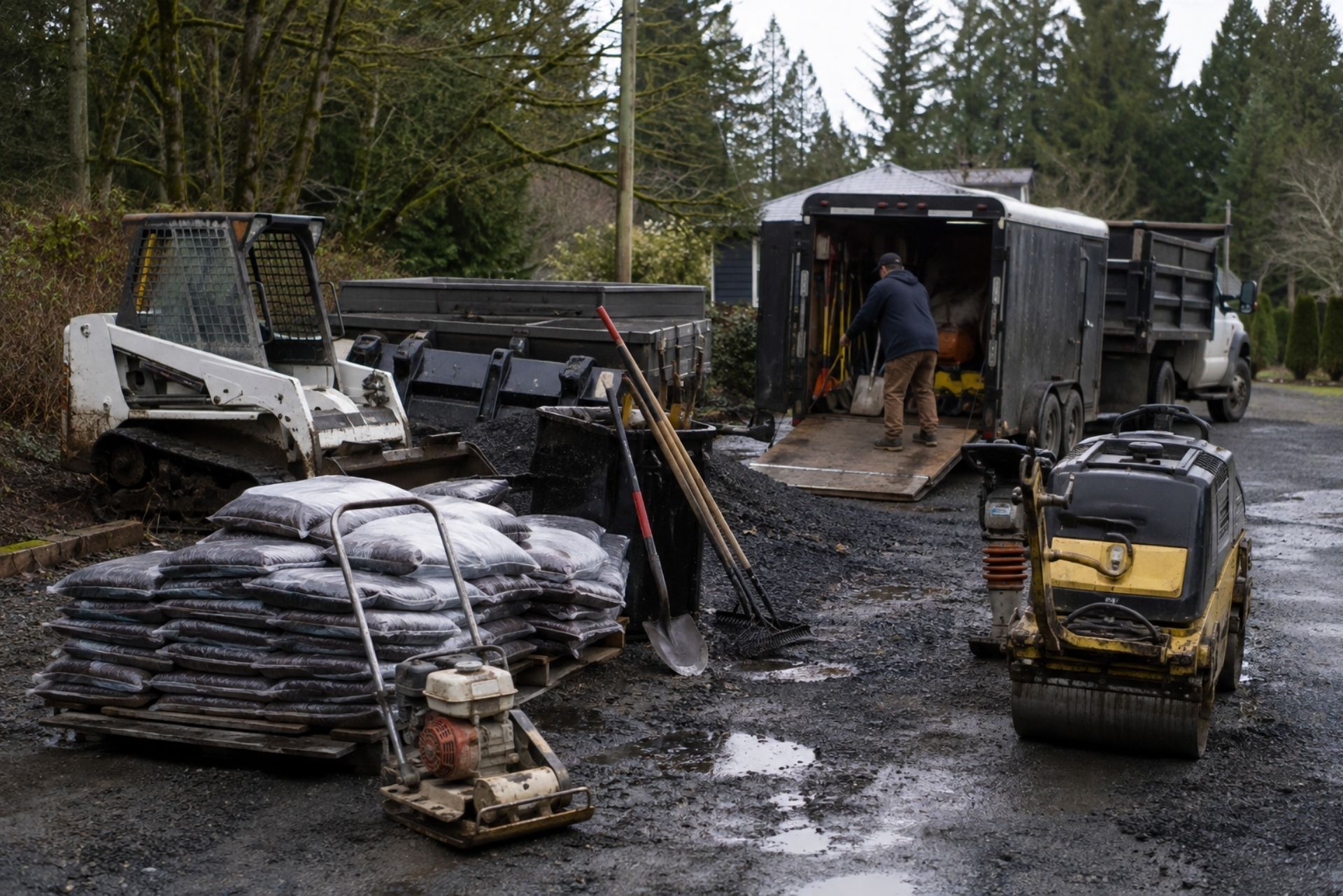
Your most expensive assets don't stay in one place. Pavers, rollers, skid steers, and plate compactors move between job sites constantly, making them vulnerable to theft, vandalism, and transport damage. A standard property policy covers equipment at your shop or yard, but inland marine insurance follows your equipment wherever it goes.
Construction equipment theft remains a persistent problem. GPS tracking has helped recovery rates, but equipment theft statistics show that stolen equipment is often stripped for parts before it's ever found. An inland marine policy typically covers replacement cost, meaning you get what it costs to buy equivalent equipment today, not the depreciated book value. For a paving company with $500,000 in mobile equipment, annual inland marine premiums generally run between $3,000 and $8,000 depending on your loss history and security measures.
Comparing Basic vs. Comprehensive Paving Policies
Not every paving contractor needs the same coverage. A one-person operation doing residential driveway patches has a very different risk profile than a 30-person crew bidding on municipal road projects. Here's how basic and comprehensive policies stack up:
| Coverage Area | Basic Policy | Comprehensive Policy |
|---|---|---|
| General Liability | $1M/$2M limits | $2M/$5M+ with umbrella |
| Commercial Auto | Owned vehicles only | Owned, hired, non-owned |
| Inland Marine | Actual cash value | Replacement cost |
| Pollution Liability | Excluded | Included (contractors pollution) |
| Completed Operations | Limited or excluded | Full coverage, 5-10 year tail |
| Professional Liability | Not included | Included for design-build work |
| Typical Annual Cost | $4,000-$10,000 | $15,000-$45,000+ |
The gap between basic and comprehensive coverage is where most claims problems occur. A basic policy might cover a slip-and-fall at your job site but leave you exposed if diesel fuel from your equipment contaminates a client's soil. The contractors pollution liability insurance market has grown steadily as environmental regulations tighten, and Washington's Department of Ecology takes contamination seriously. If you're working with hot-mix asphalt, sealcoats, or any petroleum-based materials, a pollution endorsement or standalone policy isn't optional in practice, even if it's not legally mandated.
Insurance carriers don't price paving contractor policies from a single formula. Your premiums reflect a combination of factors, some you can control and others you can't.
Project Scope: Residential Driveways vs. Commercial Lots
The type of work you do has a direct impact on your rates. Residential driveway work generally carries lower premiums because projects are smaller, equipment exposure is limited, and the dollar value of potential claims is lower. A cracked residential driveway repair gone wrong might generate a $10,000 claim.
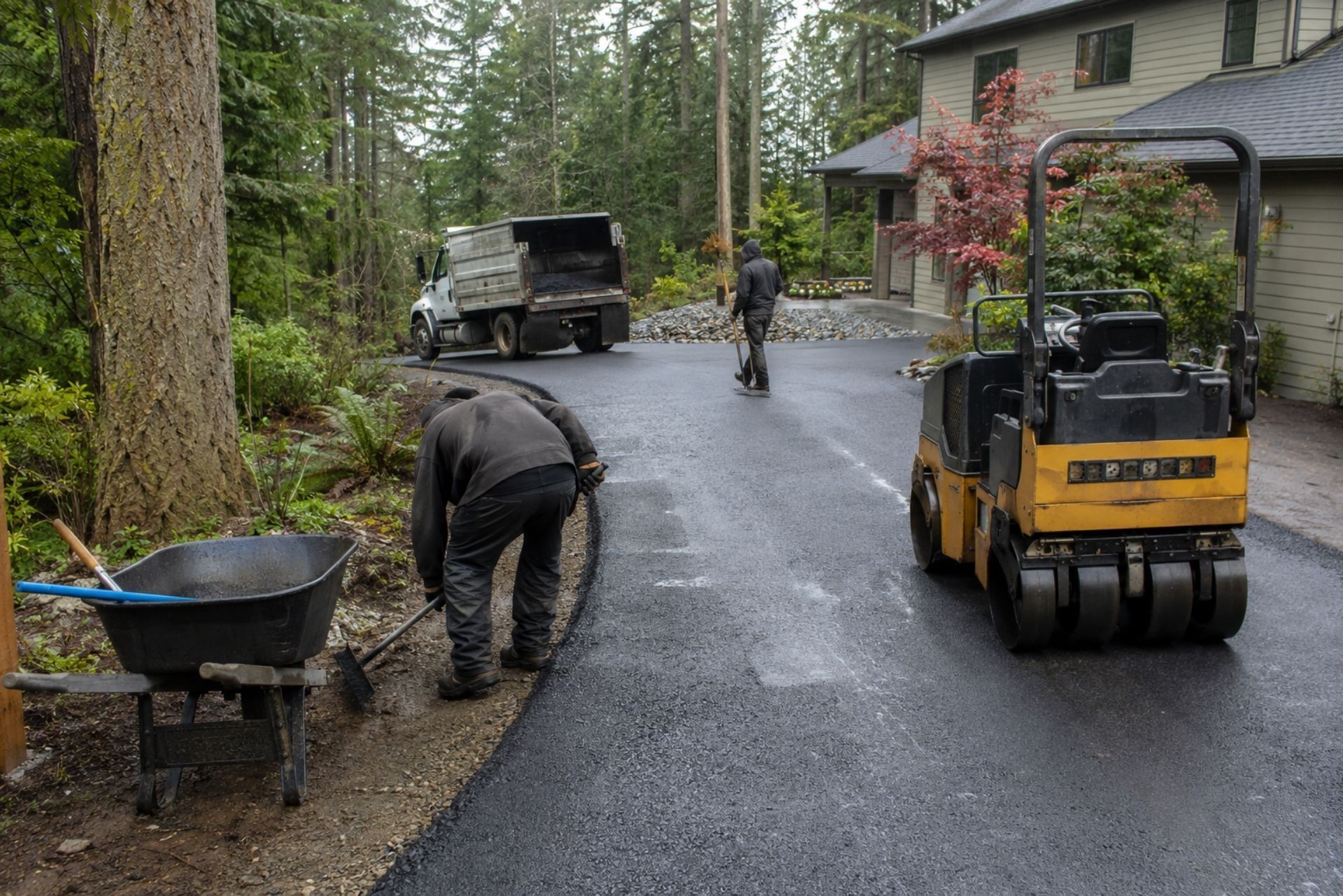
Commercial parking lot projects are a different story. You're working around active businesses, dealing with larger equipment, and the potential for significant property damage or bodily injury claims increases. Municipal and DOT work adds even more complexity, often requiring higher limits, additional insured endorsements, and wrap-up or owner-controlled insurance programs. Your carrier will want to know the breakdown of your revenue by project type, and a shift toward larger commercial work can trigger a mid-term premium adjustment.
Safety Records and Experience Modification Rates
Your experience modification rate (EMR or e-mod) is one of the most powerful levers you have over your insurance costs. Washington's L&I calculates your e-mod based on your claims history compared to other employers in the same risk class. An e-mod of 1.0 means you're average. Below 1.0 means fewer claims than expected, and your premiums drop. Above 1.0, and you're paying a surcharge.
Workers' comp rates in Washington already run high for construction trades. A paving contractor with a 1.3 e-mod could be paying 30% more than a competitor with a 0.85 e-mod, all for the same coverage. Investing in documented safety programs, regular toolbox talks, proper PPE enforcement, and return-to-work programs after injuries can push your e-mod down over a three-year rolling period. Some contractors also participate in L&I's retrospective rating program, which can generate refunds for groups with strong safety performance.
Common Questions About Paving Insurance
Do I need pollution liability if I'm only doing asphalt work? Yes, in most cases. Asphalt involves petroleum-based products, and spills or runoff can trigger environmental cleanup costs. Standard GL policies exclude pollution, so you need a separate endorsement or standalone policy.
How much does paving contractor insurance cost in Washington? A small residential operation might spend $6,000 to $12,000 annually for a basic package. Mid-size commercial contractors typically pay $20,000 to $45,000 or more, depending on payroll, fleet size, and claims history.
Can I use my personal auto insurance for my work truck? No. Personal auto policies exclude commercial use. If you're hauling materials or equipment, you need a commercial auto policy. Using personal coverage for business purposes can result in a denied claim.
What does completed operations coverage actually protect against? It covers claims that arise after you've finished a project and left the site. If a sidewalk you poured settles unevenly and someone trips on it a year later, completed operations responds to that claim.
Do subcontractors need their own insurance? Yes, and you should verify it before they set foot on your job site. If a subcontractor causes damage or gets injured and doesn't have coverage, the claim often falls back on you as the general or prime contractor.
How often should I review my policy? At least annually, and any time you add equipment, hire employees, expand into new project types, or see a significant revenue change. Mid-term reviews prevent gaps that show up at the worst possible time.
Making the Right Choice for Your Business
Getting paving contractor insurance right in Washington means understanding both the state-specific requirements and the real-world risks you face on every job. The mandatory pieces, including L&I registration, surety bonds, and state fund workers' comp, are your starting point. From there, your coverage decisions should reflect the actual work you do, the equipment you own, and the contracts you want to win.
Don't default to the cheapest policy. A bare-bones program saves money until a claim hits a coverage gap, and then it costs far more than the premium difference ever would have. Talk to an agent or broker who understands construction risks in Washington specifically, not just a generalist who sells every type of commercial policy.
Get quotes from at least three sources: a national carrier, a regional insurer familiar with Pacific Northwest construction, and an independent agent who can shop multiple markets. Document your equipment values, annual payroll, revenue breakdown by project type, and your safety record before you start comparing. The more detailed your submission, the more accurate your quotes will be, and the less likely you'll face surprises at audit time.

About The Author:
Jackson Hering
I'm a fourth-generation insurance agent, having learned the business firsthand while working alongside my father. With years of experience passed down through my family, I take pride in combining that legacy knowledge with a modern, client-focused approach. I started my career at a small, family-owned agency and worked my way up, gaining a deep understanding of the industry from the ground up.
Contact Us
Coverage for Everyday Life
Personal Insurance That Works for You
We help individuals and families find coverage that keeps life moving—without overpaying or getting lost in fine print. From auto and home insurance to umbrella and life protection, our licensed team compares options across top-rated carriers to make sure you’re covered the right way, right now.
Auto Insurance
Drive with confidence and coverage that fits your needs.
Home Insurance
Coverage for fire, theft, liability, and more.
Renters Insurance
Affordable protection for your belongings and personal liability.

Boat Insurance
Coverage for watercraft damage, liability, and gear.
Life Insurance
Prepare for the future with term or whole life policies.
Umbrella Insurance
Extra liability protection for life’s bigger risks.
Protect Your Business Without the Guesswork
Business Insurance Built for Stability & Growth
Running a business comes with risk. We help reduce it. Our team builds custom coverage for your needs, including general liability, property, commercial auto, and cyber protection. We’re fast, responsive, and easy to reach—so your insurance is one less thing to worry about.
Industries We Serve
Tailored by Industry
We understand the risks unique to your business—and how to insure against them.
Contractors & Trades
We help contractors protect their tools, vehicles, job sites, and employees with comprehensive insurance solutions. Whether you’re a general contractor, electrician, plumber, or another trade, we provide the coverage you need to keep your projects moving forward safely.
Cannabis Industry
Mosaic specializes in insuring the unique risks of the cannabis industry, including growers, retailers, processors, and delivery services. We understand the compliance challenges you face and work with carriers who can protect every stage of your operation.


Lessor’s Risk (LRO)
If you own a building and lease space to commercial tenants, we help protect your property and liability as a landlord. Our policies safeguard your investment from damages, lawsuits, and other risks that come with leasing commercial real estate.

Frequently Asked Questions
Quick Answers. Trusted Support.
Insurance doesn’t have to be confusing. We’re here to make everything clear, helpful, and hassle-free.
What states is Mosaic Insurance licensed in?
Mosaic is licensed in more than 10 states, including Washington, Oregon, Arizona, California, Texas, Colorado, and more. Our team can help you whether you live locally in WA or operate across multiple state lines.
We’re especially well-equipped to help clients with multi-state businesses, real estate portfolios, or cannabis operations that need compliance-ready coverage in various jurisdictions.
Can I get quotes from multiple carriers through Mosaic?
Yes. As an independent agency, we partner with a wide range of top-rated insurance carriers. That means you’re not locked into just one company’s pricing or coverage limitations.
Our advisors compare quotes for you, break down the differences, and help you choose the plan that fits best—no pressure, just honest advice.
Does Mosaic offer cannabis insurance, and who qualifies?
Absolutely. Mosaic is one of the few agencies with deep experience in cannabis insurance. We offer coverage for dispensaries, cultivators, delivery services, manufacturers, and labs.
If you're in a licensed state and need coverage that meets regulatory requirements, we can help set you up with carriers who understand the cannabis industry’s unique risks.
What can I do through the client portal?
You can use our 24/7 client portal to request policy changes, submit certificates of insurance, and manage your billing. It’s easy to use and always available.
This helps speed up business tasks and gives you full access to your coverage—even outside of regular office hours.
What should I expect after requesting a quote?
Once you request a quote, our team will reach out to gather a few key details. From there, we shop coverage with multiple carriers and return with clear, personalized options.
We make it easy to compare policies, ask questions, and finalize your protection—usually in 24–48 hours.
Can Mosaic help me file a claim?
Yes. Whether it’s an auto accident, property damage, or business-related issue, we’re here to guide you through the claims process. Our team can explain your coverage, contact the carrier, and help get things moving quickly.
We’re your advocate—before, during, and after a claim. You don’t have to go it alone.
Tips, News & Insights
Explore Our Blog