
Top 3 Recommended Policies

By: Jackson Hering
Licensed Personal Insurance Specialist
425-409-2497
A single scratch across a $12,000 walnut countertop. A misaligned crown molding joint that leads to a callback, then a complaint, then a demand letter. Finish carpentry sits at the intersection of precision craftsmanship and high-dollar liability, and one bad day on a jobsite can cost you more than a year's worth of profit.
If you're a finish carpentry contractor working in Washington State, your insurance needs look different from those of a framing crew or a general remodeler. You're handling expensive materials, working inside completed or near-completed homes, and your work is visible for decades. A general contractor can hide a mistake behind drywall. Yours lives in plain sight.
This guide covers everything Washington finish carpenters need to know about insurance: from the state-mandated bond and L&I requirements to specialized policies like
installation floaters, completed operations coverage, and inland marine protection for your tools. Whether you're a solo trim installer running a van-based operation or a shop owner building
custom cabinetry for high-end residential projects, the right coverage structure protects both your livelihood and your reputation. We'll break down real costs, compare policy types, flag common coverage gaps, and answer the questions we hear most often from contractors in this trade.
Core Insurance Requirements for Washington Finish Carpenters
Washington has some of the strictest contractor registration requirements in the country. Before you bid a single job, you need active registration with the Department of Labor & Industries (L&I), a surety bond, and workers' compensation coverage. Skipping any of these isn't just risky: it's illegal, and penalties include fines up to $5,000 per violation plus potential criminal charges.
Your insurance stack should be built in layers, starting with the state-mandated minimums and adding coverage based on your specific risk profile. A one-person trim installer working on residential remodels has different exposure than a six-person crew doing commercial millwork installations.
General Liability for Custom Woodworking and Trim
General liability (GL) is the backbone of your coverage. It pays for third-party bodily injury and property damage claims, which for finish carpenters often means damage to a client's existing property during installation. Think about knocking a freshly painted wall with a piece of baseboard, or a nail gun blowout that cracks a tile.
Most Washington finish carpentry contractors carry $1 million per occurrence and $2 million aggregate GL policies. Annual premiums typically fall between $800 and $2,500 for small operations, though shops with higher revenue or employees will pay more. Your GL policy also covers advertising injury and medical payments to others, which matters if a homeowner trips over your tools on a jobsite.
Washington State Contractor Bond and L&I Registration
Every specialty contractor in Washington must carry a $15,000 surety bond to maintain active registration. General contractors need $30,000. The bond protects consumers if you fail to complete work, violate the contract, or cause property damage that you refuse to remedy.
The bond itself isn't insurance: it's a financial guarantee. If a claim is paid against your bond, you owe the surety company back. Bond premiums for contractors with good credit typically run $100 to $300 per year for the $15,000 level. You'll also need to register with L&I and maintain current UBI numbers through the state.
Workers' Compensation through the Department of Labor & Industries
Washington is one of four states with a state-run workers' compensation system, meaning you can't buy workers' comp from a private insurer. All coverage goes through L&I directly. If you have employees, coverage is mandatory, no exceptions.
Even sole proprietors should consider electing optional coverage for themselves. Finish carpentry involves repetitive hand and wrist motions, work on ladders and scaffolding, and exposure to wood dust and finishing chemicals. A rotator cuff tear or a fall from a scaffold could sideline you for months. L&I rates for carpentry classifications in Washington typically range from $1.50 to $3.00 per hour worked, depending on your specific classification code and claims history.
Protecting Your Tools, Materials, and Shop
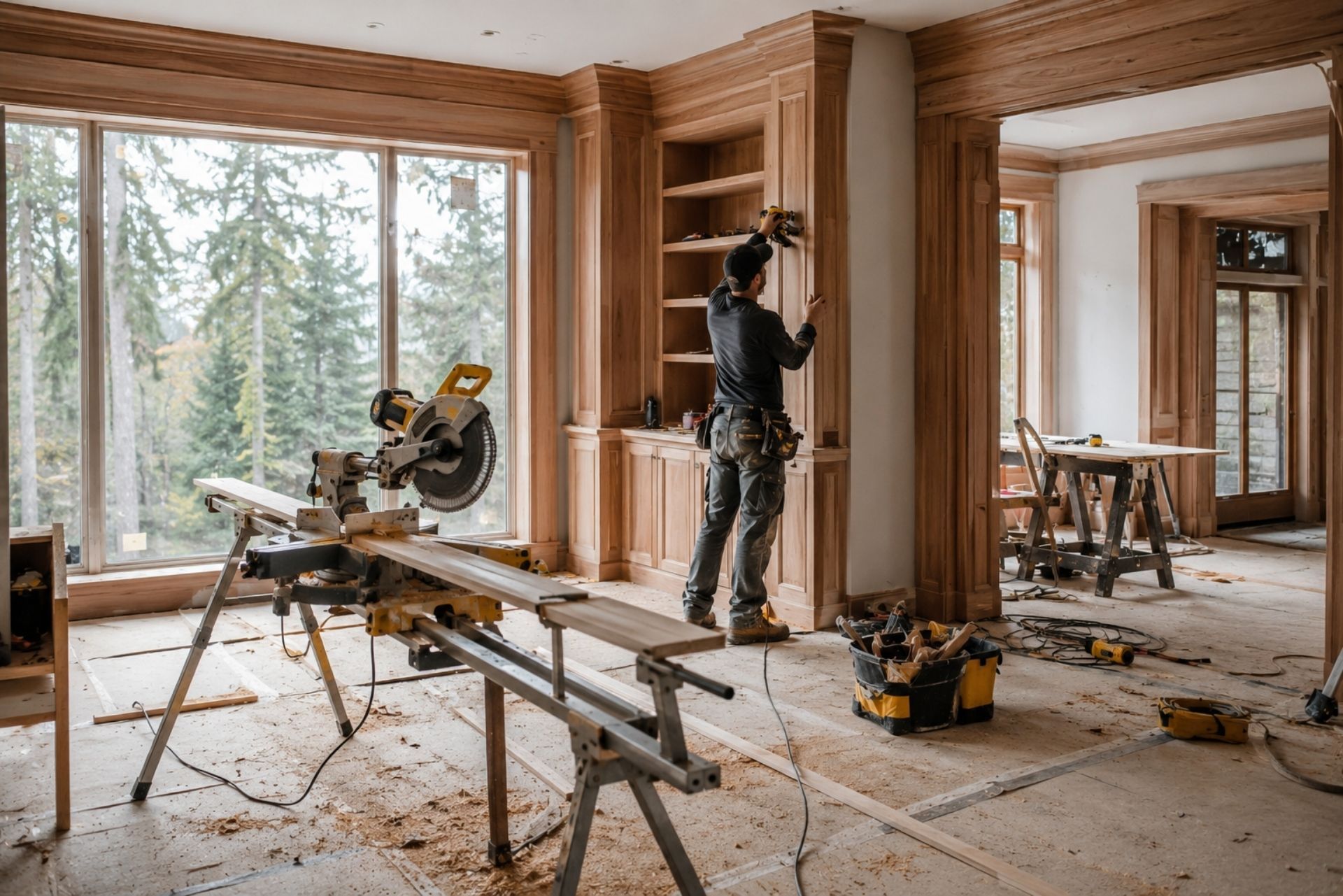
Your tools and materials represent a serious financial investment. A well-equipped finish carpenter easily carries $15,000 to $40,000 worth of equipment between their van, trailer, and shop. Standard business property policies often have gaps when it comes to mobile equipment and materials in transit.
Inland Marine Coverage for Mobile Tool Kits
Despite the name, inland marine insurance has nothing to do with boats. It covers property that moves between locations: exactly how a finish carpenter operates. Your miter saw, pin nailer, router, compressor, and hand tools travel from shop to jobsite and back again daily.
Construction site theft is a significant problem across the industry, and finish carpentry tools are particularly attractive targets because they're portable and hold resale value. Inland marine policies typically cost $300 to $800 per year and cover theft, accidental damage, and loss during transit. Make sure your policy covers replacement cost rather than actual cash value, or you'll get pennies on the dollar for a five-year-old Festool track saw.
Installation Floaters for High-Value Cabinetry and Millwork
An installation floater is a specialized policy that covers materials and products during transport and installation. For finish carpenters working with custom cabinetry, premium hardwood trim, or architectural millwork, this coverage is essential. A standard GL policy won't cover your materials if they're damaged in your van during a rear-end collision or warped by water exposure on a jobsite before installation.
Installation floaters typically cover materials from the moment you take possession through final installation. Premiums depend on the maximum value of materials you have in transit or on-site at any given time, usually running 1% to 3% of the covered value annually. If you regularly handle $50,000 in materials, expect to pay $500 to $1,500 per year.
Commercial Auto Insurance for Work Vans and Trucks
Your personal auto policy won't cover an accident that happens while you're hauling tools and materials to a job. Commercial auto insurance fills that gap and is required if the vehicle is titled to your business. Policies for a single work van in Washington typically cost $1,200 to $2,500 annually.
Pay attention to the cargo coverage within your commercial auto policy. If your van is loaded with $20,000 in tools and materials and gets totaled, the vehicle coverage pays for the truck, but you'll need inland marine or a cargo endorsement to replace what was inside.
Comparing Coverage: General Liability vs. Inland Marine
Understanding where each policy applies helps you avoid gaps and duplicate coverage. Here's a quick comparison:
| Feature | General Liability | Inland Marine |
|---|---|---|
| What it covers | Third-party injury and property damage | Your tools, equipment, and materials |
| Whose property | Someone else's | Yours |
| Theft of your tools | Not covered | Covered |
| Damage to client's home | Covered | Not covered |
| Materials in transit | Not covered | Covered (or via installation floater) |
| Typical annual cost | $800 - $2,500 | $300 - $800 |
The key distinction: GL protects others from your mistakes, while inland marine protects your stuff. You need both.
How Washington's Insurance Costs Compare for Finish Carpenters
Washington's insurance costs for contractors fall in the mid-to-upper range nationally. The state-run workers' comp system means you won't find competitive private market rates for that line, but GL and inland marine premiums are generally comparable to other western states. Contractors in the Seattle metro area tend to pay 10% to 20% more than those in rural parts of the state due to higher property values and litigation frequency. You can find
detailed cost breakdowns by trade and coverage type to benchmark your own premiums.
Managing Risks Specific to Finish Carpentry
Finish carpentry carries unique risk factors that general construction policies sometimes overlook. Your work is judged on appearance and precision, which means callbacks and defect claims are more common than in rough carpentry.
Completed Operations and Construction Defect Risks
Completed operations coverage is the part of your GL policy that protects you after you've finished a job and left the site. If crown molding separates from the ceiling six months later and damages a painting below it, or if improperly sealed cabinetry warps and a homeowner files a claim, completed operations responds.
Washington has specific deadlines and statutes governing construction defect claims. The state allows a six-year statute of limitations for construction defect actions, with discovery rules that can extend that window. This means a claim could surface years after you've moved on. Make sure your GL policy includes completed operations coverage, and don't let it lapse just because a project is done.
Environmental Hazards and Lead Paint Safety
If you do any work in homes built before 1978, you're likely disturbing lead paint during trim removal, window replacement, or cabinet demolition. EPA's RRP (Renovation, Repair, and Painting) rule requires certification, and violations carry fines of up to $37,500 per day.
Your GL policy may exclude pollution-related claims, including lead dust exposure. A separate pollution liability endorsement or standalone environmental policy fills this gap. The cost is modest, usually $300 to $600 per year, but the protection is critical if you work on older homes. Washington's housing stock includes a significant percentage of pre-1978 construction, especially in established neighborhoods of Seattle, Tacoma, and Spokane.
Common Questions About Carpentry Insurance
Do I need insurance if I'm a sole proprietor with no employees? Yes. Washington requires contractor registration, a surety bond, and GL coverage for most contract work. Workers' comp for yourself is optional but strongly recommended.
How much GL coverage should I carry? Most finish carpenters start with $1M/$2M limits. If you work on high-value homes or commercial projects, general contractors may require $2M/$4M or higher.
Does my homeowner's policy cover my tools in my home shop? Typically no. Home policies exclude business property or impose very low sublimits, usually $2,500 or less. You need a separate business property or inland marine policy.
Can I bundle my policies to save money? Yes. A Business Owner's Policy (BOP) combines GL, business property, and sometimes business income coverage at a discount of 10% to 15% compared to buying each separately.
What happens if I let my bond lapse? Your contractor registration becomes inactive. Working without active registration in Washington can result in fines, inability to file liens, and voided contracts.
What Washington Finish Carpenters Commonly Get Wrong
The most frequent mistake we see is treating insurance as a checkbox rather than a risk management tool. Contractors buy the cheapest GL policy, skip inland marine, and never think about completed operations until a claim arrives. Another common error is underreporting payroll or revenue to keep premiums low, which can void your coverage entirely if an auditor catches it.
One thing to keep in mind: your insurance requirements may change as your business grows. Adding employees, taking on commercial work, or expanding into new services like custom furniture building all shift your risk profile.
Choosing the Right Agent for Your Coverage
Not every insurance agent understands construction trades. Look for an agent or broker who specializes in contractor insurance and can explain the difference between an installation floater and an inland marine policy without reading from a script. Ask them about their experience with finish carpentry claims specifically.
Independent agents who represent multiple carriers can shop your coverage across several companies, which often produces better rates than going direct to a single insurer. Request quotes from at least three sources and compare not just premiums but deductibles, exclusions, and coverage limits.
Seasonal Considerations for Washington Contractors
Washington's climate creates seasonal swings in workload that affect your insurance needs. Winter months bring slower schedules for many residential finish carpenters, while spring and summer can mean back-to-back projects with higher material values on hand. Review your installation floater limits before busy season to make sure they reflect your actual peak inventory exposure.
Humidity and moisture are also year-round concerns in western Washington. Wood movement, finish failures, and moisture-related callbacks are common claims in this region. Document your acclimation procedures and moisture readings before installation to defend against defect claims down the road.
Making the Right Choice for Your Business
Getting your insurance right as a finish carpentry contractor in Washington isn't about buying every policy available. It's about understanding your specific risks and building coverage around them. Start with the state requirements: your bond, L&I registration, and workers' comp. Layer on GL with completed operations, add inland marine for your tools, and consider an installation floater if you handle materials worth more than a few thousand dollars at a time.
Document everything. Keep photos of completed work, save material receipts, and maintain records of your acclimation and installation procedures. When a claim does come, and eventually one will, good documentation is your best defense.
Get quotes from agents who specialize in Washington contractor coverage and compare policies side by side. The cheapest premium isn't always the best value. A policy with a $5,000 deductible and narrow coverage will cost you far more in the long run than paying an extra $200 per year for broader protection and a lower deductible. Your craftsmanship deserves the same attention to detail in your coverage as you put into every miter joint.

About The Author:
Jackson Hering
I'm a fourth-generation insurance agent, having learned the business firsthand while working alongside my father. With years of experience passed down through my family, I take pride in combining that legacy knowledge with a modern, client-focused approach. I started my career at a small, family-owned agency and worked my way up, gaining a deep understanding of the industry from the ground up.
Contact Us
Coverage for Everyday Life
Personal Insurance That Works for You
We help individuals and families find coverage that keeps life moving—without overpaying or getting lost in fine print. From auto and home insurance to umbrella and life protection, our licensed team compares options across top-rated carriers to make sure you’re covered the right way, right now.
Auto Insurance
Drive with confidence and coverage that fits your needs.
Home Insurance
Coverage for fire, theft, liability, and more.
Renters Insurance
Affordable protection for your belongings and personal liability.

Boat Insurance
Coverage for watercraft damage, liability, and gear.
Life Insurance
Prepare for the future with term or whole life policies.
Umbrella Insurance
Extra liability protection for life’s bigger risks.
Protect Your Business Without the Guesswork
Business Insurance Built for Stability & Growth
Running a business comes with risk. We help reduce it. Our team builds custom coverage for your needs, including general liability, property, commercial auto, and cyber protection. We’re fast, responsive, and easy to reach—so your insurance is one less thing to worry about.
Industries We Serve
Tailored by Industry
We understand the risks unique to your business—and how to insure against them.
Contractors & Trades
We help contractors protect their tools, vehicles, job sites, and employees with comprehensive insurance solutions. Whether you’re a general contractor, electrician, plumber, or another trade, we provide the coverage you need to keep your projects moving forward safely.
Cannabis Industry
Mosaic specializes in insuring the unique risks of the cannabis industry, including growers, retailers, processors, and delivery services. We understand the compliance challenges you face and work with carriers who can protect every stage of your operation.


Lessor’s Risk (LRO)
If you own a building and lease space to commercial tenants, we help protect your property and liability as a landlord. Our policies safeguard your investment from damages, lawsuits, and other risks that come with leasing commercial real estate.

Frequently Asked Questions
Quick Answers. Trusted Support.
Insurance doesn’t have to be confusing. We’re here to make everything clear, helpful, and hassle-free.
What states is Mosaic Insurance licensed in?
Mosaic is licensed in more than 10 states, including Washington, Oregon, Arizona, California, Texas, Colorado, and more. Our team can help you whether you live locally in WA or operate across multiple state lines.
We’re especially well-equipped to help clients with multi-state businesses, real estate portfolios, or cannabis operations that need compliance-ready coverage in various jurisdictions.
Can I get quotes from multiple carriers through Mosaic?
Yes. As an independent agency, we partner with a wide range of top-rated insurance carriers. That means you’re not locked into just one company’s pricing or coverage limitations.
Our advisors compare quotes for you, break down the differences, and help you choose the plan that fits best—no pressure, just honest advice.
Does Mosaic offer cannabis insurance, and who qualifies?
Absolutely. Mosaic is one of the few agencies with deep experience in cannabis insurance. We offer coverage for dispensaries, cultivators, delivery services, manufacturers, and labs.
If you're in a licensed state and need coverage that meets regulatory requirements, we can help set you up with carriers who understand the cannabis industry’s unique risks.
What can I do through the client portal?
You can use our 24/7 client portal to request policy changes, submit certificates of insurance, and manage your billing. It’s easy to use and always available.
This helps speed up business tasks and gives you full access to your coverage—even outside of regular office hours.
What should I expect after requesting a quote?
Once you request a quote, our team will reach out to gather a few key details. From there, we shop coverage with multiple carriers and return with clear, personalized options.
We make it easy to compare policies, ask questions, and finalize your protection—usually in 24–48 hours.
Can Mosaic help me file a claim?
Yes. Whether it’s an auto accident, property damage, or business-related issue, we’re here to guide you through the claims process. Our team can explain your coverage, contact the carrier, and help get things moving quickly.
We’re your advocate—before, during, and after a claim. You don’t have to go it alone.
Tips, News & Insights
Explore Our Blog