
Top 3 Recommended Policies

By: Jackson Hering
Licensed Personal Insurance Specialist
425-409-2497
Upgrading the interior of your Washington home can mean anything from swapping out old baseboards to building floor-to-ceiling bookshelves. The cost swing between those two projects is enormous, and the region you live in matters just as much as the materials you pick. Seattle labor rates don't look anything like what you'd pay in Spokane or the Tri-Cities, and permit rules vary by county. If you're budgeting for interior carpentry work in Washington state, you need real numbers and a clear picture of your options before you call a contractor. We've put together a practical breakdown of costs, project types, and hiring considerations so you can plan with confidence. Whether you're refreshing a single room or renovating an entire floor, understanding the price drivers up front saves you from sticker shock halfway through the job. This guide covers everything from trim and molding to custom cabinetry, along with the licensing and permit details that are specific to Washington.
Average Costs for Interior Carpentry in Washington
Interior carpentry pricing in Washington ranges widely depending on project scope, materials, and your location within the state. For basic trim and molding work, expect to pay between $4 and $12 per linear foot installed, including labor. Custom built-ins and cabinetry push costs higher, often landing between $3,000 and $15,000 per unit depending on complexity and wood species.
A straightforward door replacement runs $250 to $700 per door, while a full custom door with specialty hardware can exceed $1,500. Crown molding installation averages $6 to $15 per linear foot in most Washington markets, though premium profiles and hardwood species push that ceiling higher.
Material costs have stabilized somewhat in 2026 compared to the volatility of previous years, but domestic hardwoods like oak and cherry still carry a 15 to 25 percent premium over softwoods like pine and poplar. Your total project cost will hinge on three things: the complexity of the design, the materials you choose, and where in Washington you're located.
Regional Price Differences: Seattle vs. Eastern Washington
The gap between Seattle-area pricing and Eastern Washington can be striking. In the greater Seattle metro, including Bellevue, Tacoma, and Everett, interior carpentry labor rates typically run $55 to $95 per hour. High demand, a competitive housing market, and a higher cost of living all drive those numbers up.
Cross the Cascades and the picture changes. In Spokane, Yakima, and the Tri-Cities, hourly labor rates for skilled carpenters sit closer to $40 to $65. That 25 to 30 percent difference adds up fast on a multi-room project. A $10,000 trim-and-molding job in Seattle might cost $7,000 to $8,000 in Pullman for equivalent quality work.
Island and coastal communities like the San Juans and parts of Kitsap County present their own pricing quirks. Transportation costs for materials and limited contractor availability can push rates above even Seattle levels.
Labor Rates and Material Markup
Most Washington carpenters charge either by the hour or by the project. Hourly rates for journeyman-level carpenters range from $45 to $85 statewide, with apprentices or helpers billing at $25 to $40. Project-based quotes are more common for larger jobs, and they typically include a 15 to 30 percent markup on materials.
That markup covers the carpenter's time sourcing materials, delivery coordination, and waste. It's standard practice, not a hidden fee. If you want to supply your own materials to save on markup, discuss it early. Some carpenters welcome it; others won't warranty work done with client-supplied lumber or trim.
One cost most homeowners overlook: waste factor. A good carpenter builds 10 to 15 percent material waste into the estimate for cuts, fitting, and imperfections. Skimping on this buffer leads to mid-project delays and extra supply runs.
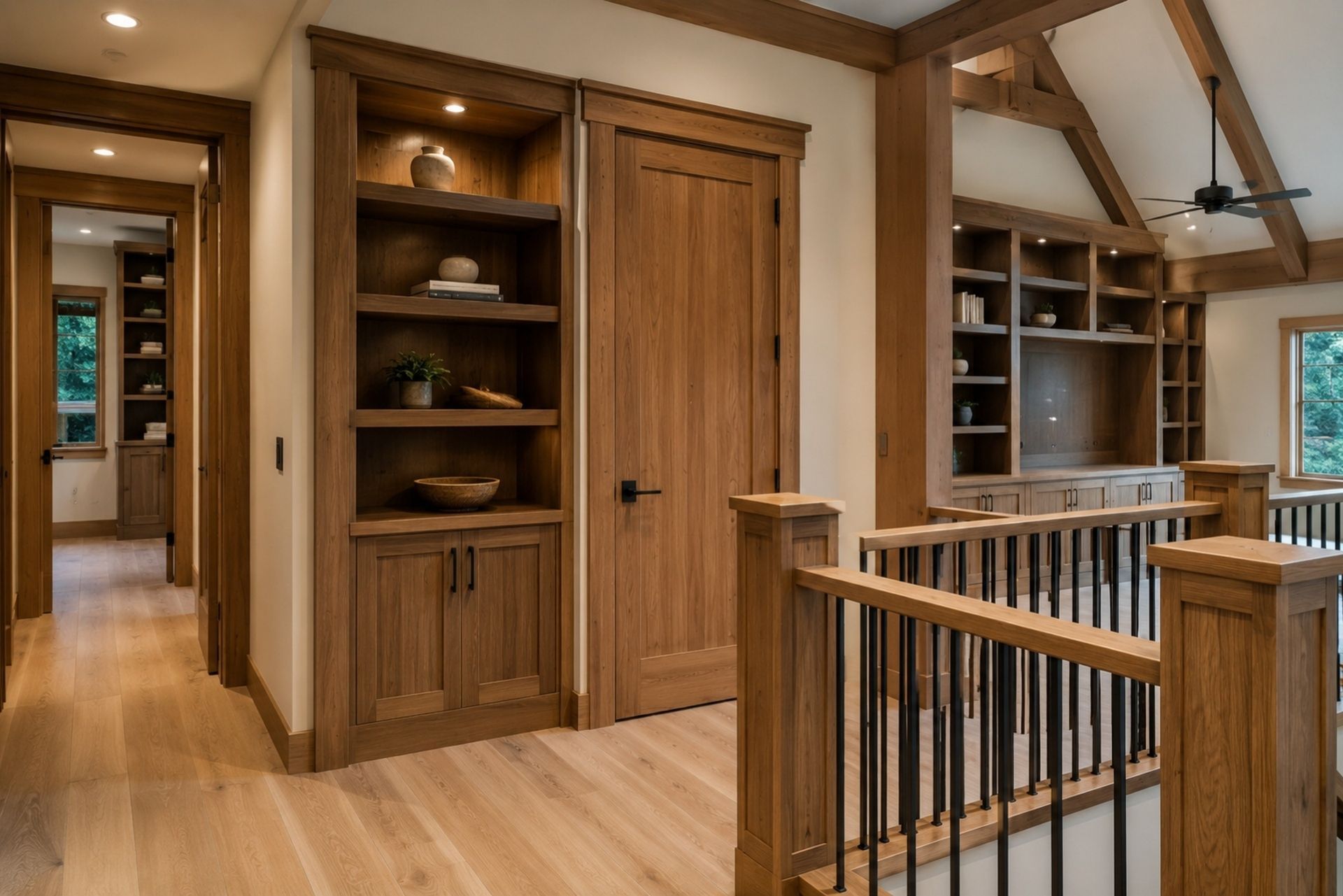
Washington homeowners tend to focus on a handful of interior carpentry projects that deliver the most visual and functional impact. Knowing what each project involves helps you set realistic expectations and compare bids accurately.
The most popular requests we see fall into three categories: trim and molding work, custom storage solutions, and door upgrades. Each comes with its own cost range, timeline, and material considerations. A trim refresh in a three-bedroom home might take two to three days, while a full set of custom built-ins could stretch across two weeks or more.
Your home's age also plays a role. Older Washington homes, particularly Craftsman-style houses common in Seattle neighborhoods, often have non-standard dimensions that require custom milling. That adds time and cost but preserves the character of the home.
Trim, Baseboards, and Crown Molding
Trim work is the most common interior carpentry request, and it offers one of the best returns on investment for the price. Replacing worn or builder-grade baseboards with solid wood profiles instantly changes the feel of a room.
Here's what typical trim projects cost in Washington:
| Project | Material Cost per Linear Foot | Installed Cost per Linear Foot |
|---|---|---|
| MDF Baseboards | $0.75 - $2.00 | $3.50 - $6.00 |
| Oak Baseboards | $2.50 - $5.00 | $6.00 - $10.00 |
| Pine Crown Molding | $1.50 - $3.00 | $5.00 - $9.00 |
| Hardwood Crown Molding | $4.00 - $8.00 | $9.00 - $15.00 |
| Window/Door Casing | $1.00 - $4.00 | $4.00 - $8.00 |
MDF is the budget-friendly choice and paints well, but it doesn't hold up to moisture. For kitchens, bathrooms, or homes in damp Western Washington climates, solid wood or PVC trim is the smarter long-term pick.
Custom Built-ins and Cabinetry
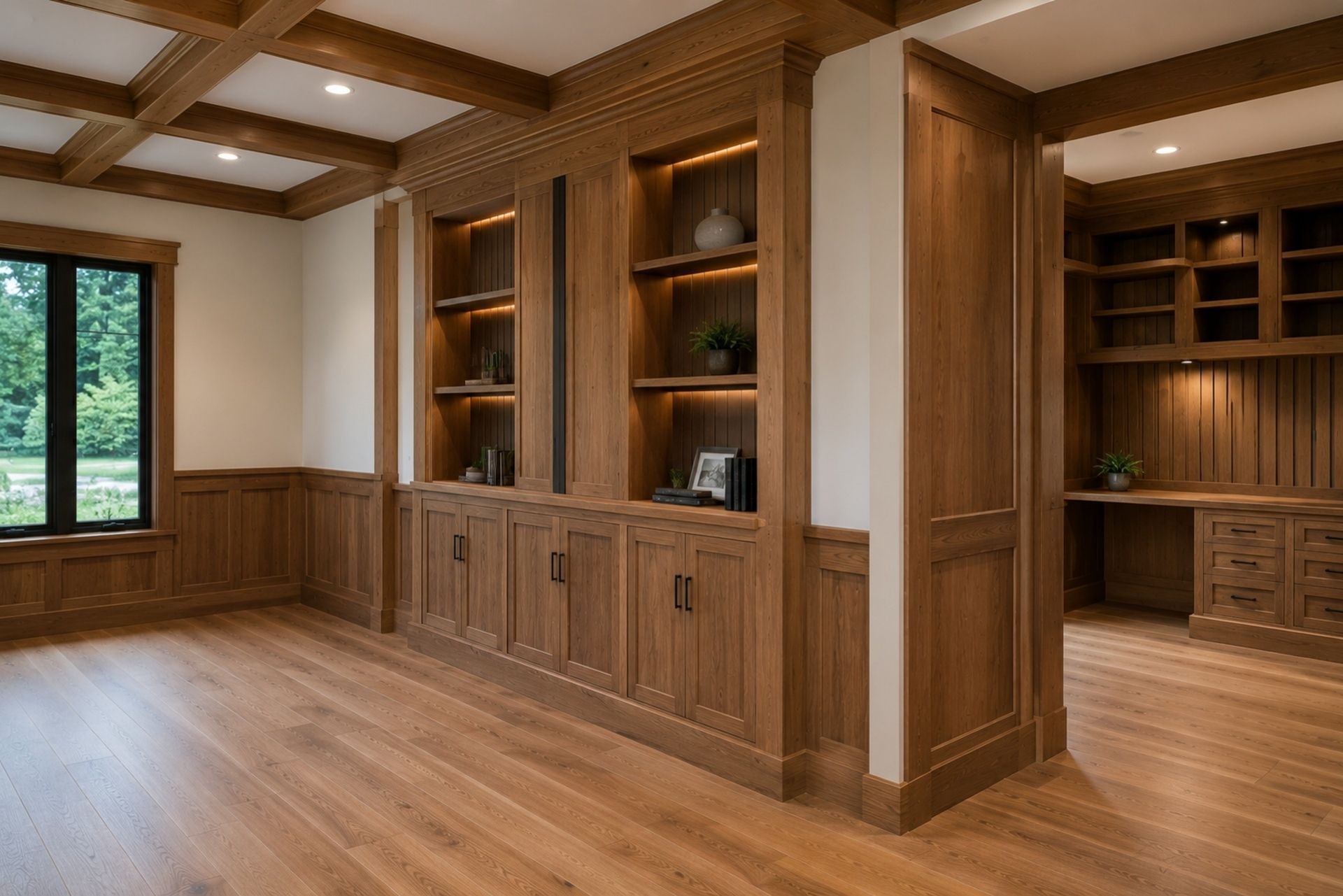
Custom built-ins are where interior carpentry costs in Washington climb quickly, but the value they add to a home is substantial. A floor-to-ceiling bookcase or window seat with storage can run $2,500 to $8,000 depending on size and finish.
Full custom kitchen or bathroom cabinetry is a bigger investment. Expect $8,000 to $25,000 for a kitchen, with the price driven by wood species, hardware, and finish complexity. Semi-custom options from local Washington cabinet shops offer a middle ground, typically 30 to 40 percent less than fully custom work.
Built-in mudroom storage, a popular request in rainy Western Washington, usually costs $1,500 to $5,000. These projects combine hooks, cubbies, and bench seating in a single unit. The best carpenters will match existing trim profiles so the built-in looks original to the home.
Door Installation and Hardware Upgrades
Replacing interior doors is one of the fastest ways to modernize a home. Hollow-core doors, common in homes built from the 1970s through the 2000s, can be swapped for solid-core or solid-wood doors that improve both sound insulation and aesthetics.
A pre-hung interior door installed by a Washington carpenter costs $300 to $700 on average. Slab-only replacements, where the existing frame stays in place, run $150 to $400 installed. Barn-style sliding doors have remained popular in 2026 and typically cost $400 to $1,200 including hardware and installation.
Hardware upgrades alone can refresh a room without replacing the door itself. Swapping builder-grade hinges and knobs for matte black or brushed brass hardware costs $30 to $80 per door in materials, plus $50 to $100 in labor if you hire it out.
Project Comparison: Standard vs. Custom Finishes
The difference between standard and custom finishes often comes down to material grade, joinery method, and detail work. Here's a side-by-side look at what you're paying for:
| Feature | Standard Finish | Custom Finish |
|---|---|---|
| Material | MDF, pine, poplar | Oak, cherry, walnut, reclaimed wood |
| Joinery | Nail gun, glue | Mortise-and-tenon, dovetail |
| Finish | Paint-grade | Stain-grade with hand-applied finish |
| Timeline | 1-3 days (per room) | 1-3 weeks (per room) |
| Cost Range | $1,500 - $4,000/room | $5,000 - $15,000+/room |
| Warranty | Varies | Often 5-10 years on craftsmanship |
Standard finishes work well for rental properties, quick flips, or rooms that don't need to make a statement. Custom finishes make sense for primary residences where you plan to stay, heritage homes, or spaces where craftsmanship is part of the design intent.
Hiring Professionals vs. DIY in Washington
Some interior carpentry projects are well-suited to handy homeowners. Replacing baseboards, installing pre-hung doors, or adding simple shelving are all reasonable DIY tasks if you own a miter saw and have some patience. The savings can be significant: 40 to 60 percent of the total project cost is typically labor.
That said, anything involving load-bearing walls, complex joinery, or precise fitting is best left to a professional. A poorly installed crown molding job with visible gaps looks worse than no crown molding at all. And mistakes with custom cabinetry can waste hundreds of dollars in materials.
The middle path works for many Washington homeowners: handle demolition and prep work yourself, then bring in a carpenter for the skilled installation. This approach cuts labor hours without risking quality on the parts that matter most.
Washington State Licensing and Insurance Requirements
Washington requires contractors performing work over $600 to hold an active registration with the Department of Labor & Industries (L&I). This applies to carpenters, general contractors, and specialty trades. You can verify any contractor's registration status through the L&I contractor lookup tool.
Registered contractors must carry a surety bond of at least $12,000 and maintain liability insurance. They're also required to provide workers' compensation coverage through Washington's state-run L&I fund or an approved self-insurance program. If a carpenter can't show you their registration number, that's a red flag.
Hiring an unregistered contractor puts you at risk. If a worker is injured on your property and lacks L&I coverage, you could face personal liability. Washington law also limits your ability to file complaints or seek restitution through the contractor bond if the person was never properly registered.
Permit Needs for Structural Interior Work
Most cosmetic interior carpentry, like trim, molding, and built-in furniture, doesn't require a permit in Washington. But the moment your project involves structural changes, electrical work, or plumbing modifications, permits come into play.
Removing or modifying a wall to create an open floor plan requires a building permit in every Washington jurisdiction. Even adding a large pass-through opening between rooms may trigger a structural review. Permit fees range from $100 to $500 depending on your county, and inspections add time to the project timeline.
If your carpenter subcontracts electrical or plumbing work as part of a built-in project, those subs need their own specialty licenses. Your general carpenter's registration doesn't cover electrical or plumbing work. Always confirm who's pulling the permits and carrying the liability before work begins.
Frequently Asked Questions
How much does it cost to install crown molding in a typical Washington home? For a 1,500-square-foot home, expect $1,800 to $4,500 for standard crown molding installed. Hardwood profiles and rooms with cathedral ceilings will push costs higher.
Do I need a permit for interior carpentry work? Not for cosmetic work like trim, baseboards, or built-in shelving. Permits are required if you're altering structural walls, adding electrical outlets, or modifying plumbing.
How do I verify a Washington carpenter's license? Search the L&I contractor verification database using the contractor's name or registration number. Active registration, bond, and insurance status are all visible.
Can I save money by supplying my own materials? Yes, but discuss it with your carpenter first. Some won't warranty work done with client-supplied materials, and you'll be responsible for ordering the right quantities.
How long does a typical interior carpentry project take? Simple trim work in one room takes one to two days. Custom built-ins or full-room cabinetry can take one to three weeks depending on complexity.
Is MDF or solid wood better for interior trim in Washington? MDF paints well and costs less, but it swells with moisture. In Western Washington's damp climate, solid wood or PVC trim holds up better in kitchens, bathrooms, and entryways.
Getting interior carpentry right in Washington starts with understanding your costs, knowing your options, and hiring the right people. Pin down your project scope before requesting bids. A clear description of what you want, including material preferences and finish expectations, helps carpenters give you accurate quotes instead of vague ranges.
Get at least three written estimates and verify each contractor's L&I registration. Ask to see photos of completed projects similar to yours, and check references from recent clients. The cheapest bid isn't always the best value, especially if it means cutting corners on materials or skipping proper finishing steps.
If you're planning a renovation in 2026, start gathering quotes early. Skilled carpenters in the Seattle metro and popular retirement communities like Sequim and Leavenworth often book out four to eight weeks in advance. Early planning gives you better scheduling options and more time to compare your Washington interior carpentry costs and options before committing to a contract.

About The Author:
Jackson Hering
I'm a fourth-generation insurance agent, having learned the business firsthand while working alongside my father. With years of experience passed down through my family, I take pride in combining that legacy knowledge with a modern, client-focused approach. I started my career at a small, family-owned agency and worked my way up, gaining a deep understanding of the industry from the ground up.
Contact Us
Coverage for Everyday Life
Personal Insurance That Works for You
We help individuals and families find coverage that keeps life moving—without overpaying or getting lost in fine print. From auto and home insurance to umbrella and life protection, our licensed team compares options across top-rated carriers to make sure you’re covered the right way, right now.
Auto Insurance
Drive with confidence and coverage that fits your needs.
Home Insurance
Coverage for fire, theft, liability, and more.
Renters Insurance
Affordable protection for your belongings and personal liability.

Boat Insurance
Coverage for watercraft damage, liability, and gear.
Life Insurance
Prepare for the future with term or whole life policies.
Umbrella Insurance
Extra liability protection for life’s bigger risks.
Protect Your Business Without the Guesswork
Business Insurance Built for Stability & Growth
Running a business comes with risk. We help reduce it. Our team builds custom coverage for your needs, including general liability, property, commercial auto, and cyber protection. We’re fast, responsive, and easy to reach—so your insurance is one less thing to worry about.
Industries We Serve
Tailored by Industry
We understand the risks unique to your business—and how to insure against them.

Contractors & Trades
We help contractors protect their tools, vehicles, job sites, and employees with comprehensive insurance solutions. Whether you’re a general contractor, electrician, plumber, or another trade, we provide the coverage you need to keep your projects moving forward safely.
Cannabis Industry
Mosaic specializes in insuring the unique risks of the cannabis industry, including growers, retailers, processors, and delivery services. We understand the compliance challenges you face and work with carriers who can protect every stage of your operation.


Lessor’s Risk (LRO)
If you own a building and lease space to commercial tenants, we help protect your property and liability as a landlord. Our policies safeguard your investment from damages, lawsuits, and other risks that come with leasing commercial real estate.

Frequently Asked Questions
Quick Answers. Trusted Support.
Insurance doesn’t have to be confusing. We’re here to make everything clear, helpful, and hassle-free.
What states is Mosaic Insurance licensed in?
Mosaic is licensed in more than 10 states, including Washington, Oregon, Arizona, California, Texas, Colorado, and more. Our team can help you whether you live locally in WA or operate across multiple state lines.
We’re especially well-equipped to help clients with multi-state businesses, real estate portfolios, or cannabis operations that need compliance-ready coverage in various jurisdictions.
Can I get quotes from multiple carriers through Mosaic?
Yes. As an independent agency, we partner with a wide range of top-rated insurance carriers. That means you’re not locked into just one company’s pricing or coverage limitations.
Our advisors compare quotes for you, break down the differences, and help you choose the plan that fits best—no pressure, just honest advice.
Does Mosaic offer cannabis insurance, and who qualifies?
Absolutely. Mosaic is one of the few agencies with deep experience in cannabis insurance. We offer coverage for dispensaries, cultivators, delivery services, manufacturers, and labs.
If you're in a licensed state and need coverage that meets regulatory requirements, we can help set you up with carriers who understand the cannabis industry’s unique risks.
What can I do through the client portal?
You can use our 24/7 client portal to request policy changes, submit certificates of insurance, and manage your billing. It’s easy to use and always available.
This helps speed up business tasks and gives you full access to your coverage—even outside of regular office hours.
What should I expect after requesting a quote?
Once you request a quote, our team will reach out to gather a few key details. From there, we shop coverage with multiple carriers and return with clear, personalized options.
We make it easy to compare policies, ask questions, and finalize your protection—usually in 24–48 hours.
Can Mosaic help me file a claim?
Yes. Whether it’s an auto accident, property damage, or business-related issue, we’re here to guide you through the claims process. Our team can explain your coverage, contact the carrier, and help get things moving quickly.
We’re your advocate—before, during, and after a claim. You don’t have to go it alone.
Tips, News & Insights
Explore Our Blog