
Top 3 Recommended Policies

By: Jackson Hering
Licensed Personal Insurance Specialist
425-409-2497
A burst pipe behind a newly installed water softener can cause $20,000 in damage to a homeowner's kitchen before anyone notices the leak. If you're the installer who connected that unit, the claim lands squarely on your business. Water softening equipment installers in Washington face a unique mix of risks: plumbing connections that can fail, chemical handling, specialized tools loaded into service vans, and warranty callbacks months after a job wraps up. The right insurance setup protects you from all of it, but piecing together the correct policies takes some knowledge of both the trade and Washington's specific contractor requirements.
This guide walks through the essential coverages, from general liability and products-completed operations to inland marine and pollution liability. Whether you're a one-person operation running service calls out of a cargo van or a growing team handling commercial water treatment systems, your exposure is real, and it's specific to this trade. We've broken down what Washington state requires, what your contracts will demand, and where the coverage gaps tend to hide. Premiums for a small water softener installation business in Washington typically range from $1,200 to $3,500 annually for general liability alone, with total insurance packages running $4,000 to $12,000 depending on payroll, revenue, and the breadth of coverage you carry.
Essential Insurance for Washington Water Treatment Professionals
Water softener installers occupy a niche that overlaps plumbing, water treatment, and specialty contracting. That overlap means your insurance needs don't fit neatly into a single off-the-shelf policy. You need coverage that accounts for the plumbing connections you make, the water quality promises tied to your products, and the ongoing risk that a system you installed six months ago could malfunction and flood a basement.
Washington state has specific requirements for contractors that go beyond what you'll find in many other states. The combination of mandatory bonding, state-run workers' compensation through the Department of Labor & Industries, and local licensing rules creates a regulatory environment you can't afford to ignore. Getting caught without proper coverage doesn't just mean paying out of pocket for a claim. It can mean losing your contractor registration entirely.
Washington State Contractor Bonding Requirements
Washington specialty contractors, including water softener installers, are now required to carry a $15,000 continuous surety bond, a significant increase from previous levels. This bond protects consumers if you fail to complete a job, violate your contract, or cause property damage that you refuse to address.
Your bond isn't insurance for you. It's a guarantee to the public. If a claim is paid against your bond, the surety company comes after you for reimbursement. The contractor registration process through L&I requires proof of this bond before you can legally operate. Bond premiums typically cost 1% to 5% of the bond amount annually, so expect to pay $150 to $750 per year depending on your credit and claims history.
General Liability: Protecting Against Water Damage Claims
General liability is the foundation of your insurance program. For water softener installers, the most common claims involve water damage from faulty connections, leaks at fittings, or drain line failures. A standard GL policy covers bodily injury and property damage that occurs during your operations, and typical coverage limits start at $1 million per occurrence with a $2 million aggregate.
Pay close attention to your products-completed operations coverage within the GL policy. This is what protects you after you've left the job site. If a water softener you installed three months ago develops a leak because of a connection you made, products-completed operations is the coverage that responds. Many installers don't realize this coverage has its own sublimit, and if it's too low, you're exposed on every past job you've done.
Errors and Omissions for Water Quality Testing
If you test water hardness, recommend specific systems based on those tests, or make claims about water quality improvements, you need errors and omissions coverage (also called professional liability). A customer who installs a $4,000 system based on your recommendation, only to find it doesn't address their actual water issue, has grounds for a professional negligence claim.
E&O policies for water treatment professionals typically run $500 to $1,500 annually. They cover the cost of defending against claims that your professional advice or testing was flawed, even if you did everything right. The defense costs alone can justify the premium.
Comparing Coverage Needs: Basic vs. Comprehensive Plans
Small operations doing a handful of residential installs per month have different risk profiles than companies running multiple crews across commercial and residential jobs. Your insurance should reflect that reality.
A basic plan might cover a sole proprietor with minimal payroll and straightforward residential work. A comprehensive plan adds the layers that growing businesses need: higher limits, broader coverage triggers, and policies that address fleet vehicles, employee injuries, and environmental exposure.
Coverage Comparison Table
| Coverage Type | Basic Plan | Comprehensive Plan |
|---|---|---|
| General Liability | $500K/$1M limits | $1M/$2M limits |
| Products-Completed Ops | Included in GL (low sublimit) | Separate higher sublimit ($1M+) |
| Commercial Auto | Liability only | Liability + comprehensive/collision |
| Inland Marine | Not included | $25K-$75K tool/equipment coverage |
| Workers' Comp | State minimum (if employees) | State minimum (mandatory in WA) |
| Pollution Liability | Not included | $500K-$1M for chemical/brine claims |
| E&O/Professional | Not included | $500K-$1M |
| Umbrella | Not included | $1M-$5M excess coverage |
| Estimated Annual Cost | $1,200-$3,500 | $6,000-$12,000+ |
The jump from basic to comprehensive might look steep, but a single water damage claim that exceeds your limits can cost far more than years of premium payments.
Protecting Your Specialized Equipment and Inventory
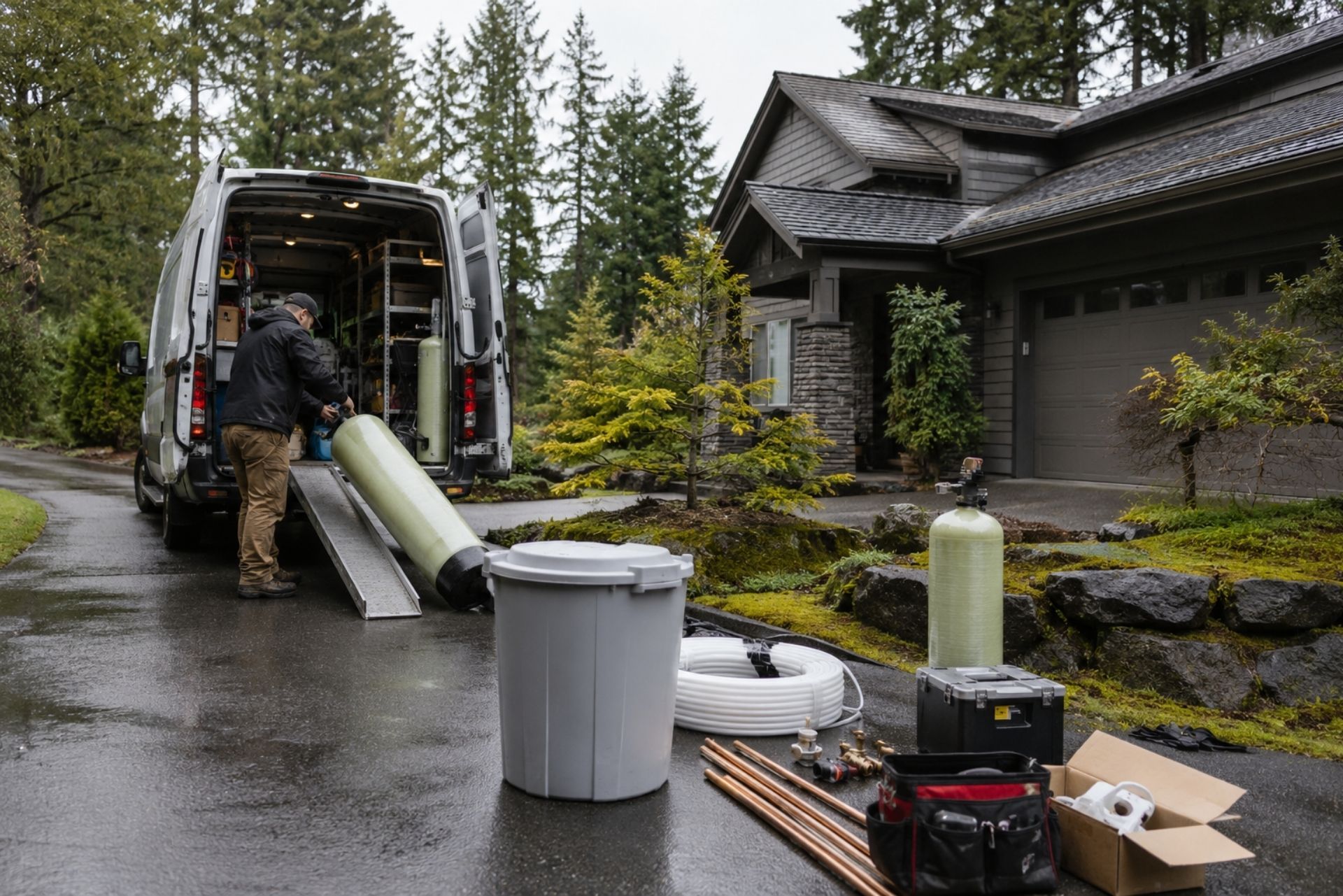
Water softener installers carry valuable inventory and tools. Between pipe cutters, crimping tools, water testing equipment, softener units, salt inventory, and resin tanks, a fully stocked service van might hold $15,000 to $40,000 in gear and product. Standard commercial property policies often don't cover items in transit or stored in vehicles.
Construction equipment theft costs the industry over $1 billion annually, and service vehicles are frequent targets because they're parked at job sites, in driveways, and in commercial lots overnight. Your standard auto policy won't cover the contents of the van, only the vehicle itself.
Inland Marine Insurance for Tools in Transit
Inland marine insurance is specifically designed for property that moves between locations. For water softener installers, this covers your tools, testing equipment, and inventory while they're in your van, at a job site, or in temporary storage. Policies typically range from $300 to $1,200 annually depending on the total value you need to insure.
Keep an updated inventory list with serial numbers and photos. Claims adjusters process tool theft claims much faster when you can document exactly what was taken. Some insurers offer blanket coverage up to a set limit, while others require a scheduled list of high-value items. If you carry specialized water analysis equipment worth $3,000 or more per unit, scheduling those items individually gives you better protection.
Commercial Auto for Service Vans
Your personal auto policy won't cover a vehicle used for business purposes. If you're driving a van loaded with softener units to a job site and cause an accident, your personal insurer can deny the claim entirely. Commercial auto policies cover liability, collision, and comprehensive damage for vehicles used in your trade.
Washington requires minimum auto liability limits of $25,000 per person and $50,000 per accident for bodily injury, plus $10,000 for property damage. Those minimums are dangerously low for a commercial vehicle. Most contractors carry $500,000 to $1,000,000 in combined single limit coverage. Premiums depend on driving records, vehicle value, and how many miles your crew logs annually, but expect $1,500 to $4,000 per vehicle per year.
Managing Risk During Installation and Service Calls
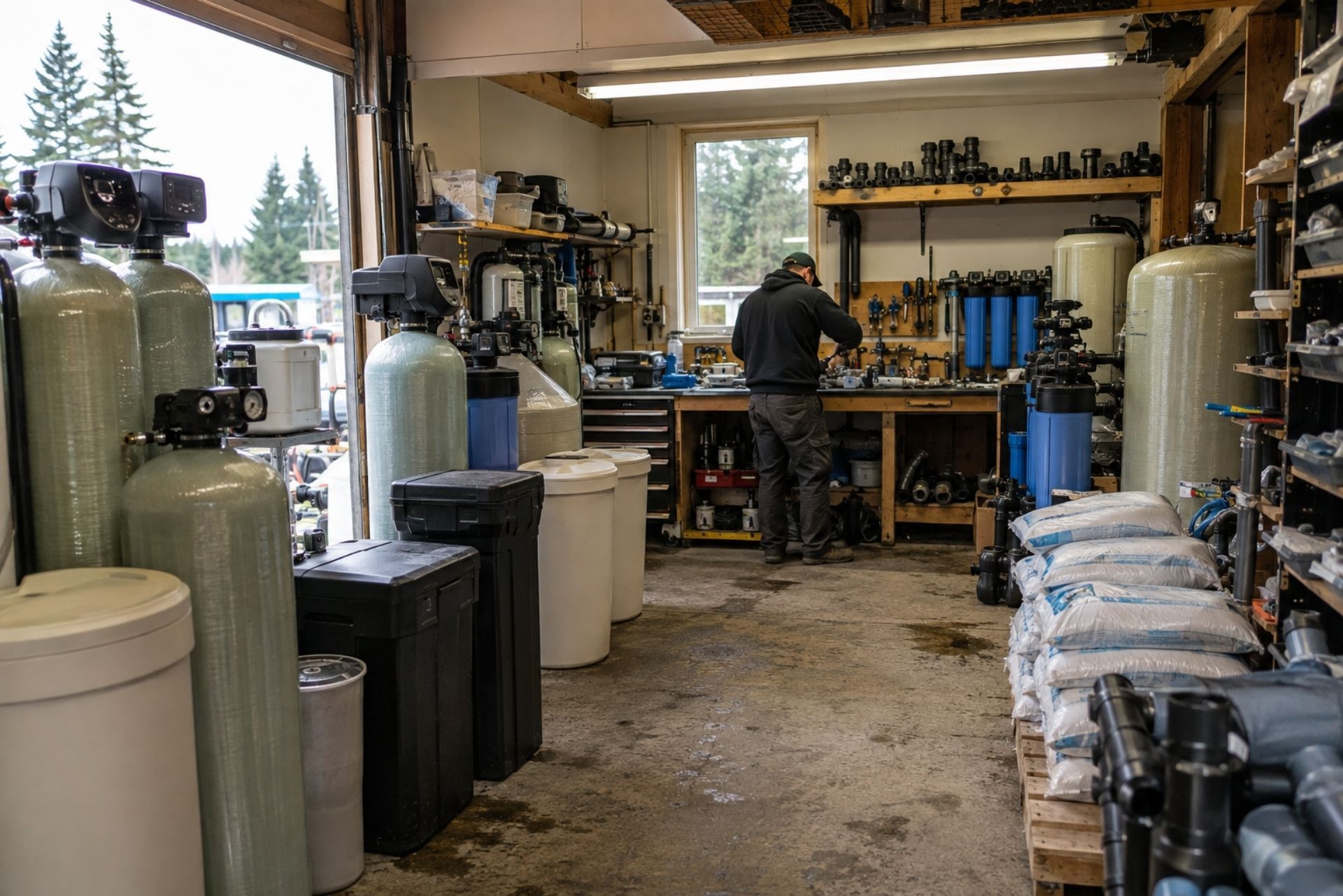
management for water softener installers goes beyond buying policies. It includes documenting your work, maintaining proper licensing, and understanding the specific exposures that come with handling chemicals and making plumbing connections in occupied homes.
Take photos before, during, and after every installation. Document the condition of existing plumbing, note any pre-existing water damage, and keep signed work orders that clearly describe the scope of your installation. These records become your best defense when a homeowner claims you caused damage that was already there.
Workers' Compensation in Washington State
Washington is one of a handful of states that operates a monopolistic workers' compensation system through L&I. You can't buy workers' comp from a private insurer here. All employers must register with L&I and pay premiums based on their classification code and payroll.
Water softener installers typically fall under plumbing-related classification codes, with rates running approximately $1.50 to $3.00 per $100 of payroll. For a small operation with $150,000 in annual payroll, that translates to roughly $2,250 to $4,500 per year. Sole proprietors without employees can opt out of coverage for themselves, but the moment you hire anyone, even part-time helpers, coverage becomes mandatory.
Pollution Liability for Brine Discharge and Chemicals
Standard general liability policies exclude pollution-related claims. If brine discharge from a system you installed contaminates a neighbor's well or violates local discharge regulations, your GL policy won't respond. Pollution liability fills that gap.
Washington has specific regulations around brine discharge, and some municipalities restrict or ban certain types of water softener discharge entirely. If you install a system in an area with discharge restrictions and the homeowner faces fines or cleanup costs, you could be pulled into that liability. Pollution policies for water treatment contractors typically cost $400 to $1,500 annually and cover both sudden and gradual pollution events.
Common Questions About Water Softener Insurance
Installers new to the trade, or those transitioning from general plumbing to water treatment specialization, tend to have similar questions about coverage. Here are the ones we hear most often.
FAQs for New Installers
Do I need insurance if I only do a few installs per month? Yes. Washington requires a surety bond and contractor registration regardless of volume. One bad install can generate a claim that exceeds your annual revenue.
Does my general liability policy cover systems I installed last year? Only if your products-completed operations coverage is active. If you cancel your GL policy or let it lapse, you lose retroactive protection on past work. Keep coverage continuous.
Can I use my personal truck for business without commercial auto insurance? Technically you can drive it, but your personal insurer can deny any claim that occurs while you're using the vehicle for work. This is one of the most common coverage gaps we see.
What's the difference between my surety bond and general liability? Your bond protects consumers and reimburses them if you fail to meet your obligations. General liability protects you by paying claims and defense costs when someone alleges your work caused damage or injury.
Do I need pollution liability if I only install standard residential softeners? It depends on your local jurisdiction. Some Washington counties have strict brine discharge rules. If a system you install creates a pollution issue, standard GL won't cover it. A pollution endorsement is inexpensive peace of mind.
How often should I review my coverage? At least annually, or whenever you add employees, vehicles, or expand into commercial work. Seasonal fluctuations in inventory and mid-year growth can leave you underinsured if your policy limits haven't kept pace.
Making the Right Choice for Your Business
Getting insurance right for a water softening installation business in Washington isn't about buying the cheapest policy you can find. It's about matching your actual exposures to the right coverages so that a single claim doesn't shut you down.
Start by documenting your full risk profile: how many installs you do monthly, the value of tools and inventory in your vehicles, your annual payroll, and the types of systems you work with. Take that information to at least three agents, including one who specializes in contractor or trade-specific coverage. An independent agent who understands water treatment installer insurance can spot gaps that a generalist might miss.
The cost of being properly insured, typically $4,000 to $12,000 annually for a small to mid-size operation, is a fraction of what a single uninsured water damage claim or workers' comp violation can cost. Build your coverage around your real risks, review it as your business grows, and keep your contractor registration and bond current. That combination keeps you legal, protects your customers, and lets you focus on growing your business instead of worrying about the next claim.

About The Author:
Jackson Hering
I'm a fourth-generation insurance agent, having learned the business firsthand while working alongside my father. With years of experience passed down through my family, I take pride in combining that legacy knowledge with a modern, client-focused approach. I started my career at a small, family-owned agency and worked my way up, gaining a deep understanding of the industry from the ground up.
Contact Us
Coverage for Everyday Life
Personal Insurance That Works for You
We help individuals and families find coverage that keeps life moving—without overpaying or getting lost in fine print. From auto and home insurance to umbrella and life protection, our licensed team compares options across top-rated carriers to make sure you’re covered the right way, right now.
Auto Insurance
Drive with confidence and coverage that fits your needs.
Home Insurance
Coverage for fire, theft, liability, and more.
Renters Insurance
Affordable protection for your belongings and personal liability.

Boat Insurance
Coverage for watercraft damage, liability, and gear.
Life Insurance
Prepare for the future with term or whole life policies.
Umbrella Insurance
Extra liability protection for life’s bigger risks.
Protect Your Business Without the Guesswork
Business Insurance Built for Stability & Growth
Running a business comes with risk. We help reduce it. Our team builds custom coverage for your needs, including general liability, property, commercial auto, and cyber protection. We’re fast, responsive, and easy to reach—so your insurance is one less thing to worry about.
Industries We Serve
Tailored by Industry
We understand the risks unique to your business—and how to insure against them.
Contractors & Trades
We help contractors protect their tools, vehicles, job sites, and employees with comprehensive insurance solutions. Whether you’re a general contractor, electrician, plumber, or another trade, we provide the coverage you need to keep your projects moving forward safely.
Cannabis Industry
Mosaic specializes in insuring the unique risks of the cannabis industry, including growers, retailers, processors, and delivery services. We understand the compliance challenges you face and work with carriers who can protect every stage of your operation.


Lessor’s Risk (LRO)
If you own a building and lease space to commercial tenants, we help protect your property and liability as a landlord. Our policies safeguard your investment from damages, lawsuits, and other risks that come with leasing commercial real estate.

Frequently Asked Questions
Quick Answers. Trusted Support.
Insurance doesn’t have to be confusing. We’re here to make everything clear, helpful, and hassle-free.
What states is Mosaic Insurance licensed in?
Mosaic is licensed in more than 10 states, including Washington, Oregon, Arizona, California, Texas, Colorado, and more. Our team can help you whether you live locally in WA or operate across multiple state lines.
We’re especially well-equipped to help clients with multi-state businesses, real estate portfolios, or cannabis operations that need compliance-ready coverage in various jurisdictions.
Can I get quotes from multiple carriers through Mosaic?
Yes. As an independent agency, we partner with a wide range of top-rated insurance carriers. That means you’re not locked into just one company’s pricing or coverage limitations.
Our advisors compare quotes for you, break down the differences, and help you choose the plan that fits best—no pressure, just honest advice.
Does Mosaic offer cannabis insurance, and who qualifies?
Absolutely. Mosaic is one of the few agencies with deep experience in cannabis insurance. We offer coverage for dispensaries, cultivators, delivery services, manufacturers, and labs.
If you're in a licensed state and need coverage that meets regulatory requirements, we can help set you up with carriers who understand the cannabis industry’s unique risks.
What can I do through the client portal?
You can use our 24/7 client portal to request policy changes, submit certificates of insurance, and manage your billing. It’s easy to use and always available.
This helps speed up business tasks and gives you full access to your coverage—even outside of regular office hours.
What should I expect after requesting a quote?
Once you request a quote, our team will reach out to gather a few key details. From there, we shop coverage with multiple carriers and return with clear, personalized options.
We make it easy to compare policies, ask questions, and finalize your protection—usually in 24–48 hours.
Can Mosaic help me file a claim?
Yes. Whether it’s an auto accident, property damage, or business-related issue, we’re here to guide you through the claims process. Our team can explain your coverage, contact the carrier, and help get things moving quickly.
We’re your advocate—before, during, and after a claim. You don’t have to go it alone.
Tips, News & Insights
Explore Our Blog