
Top 3 Recommended Policies

By: Jackson Hering
Licensed Personal Insurance Specialist
425-409-2497
A single kitchen fire, a slip-and-fall lawsuit from a guest, or a walk-in cooler failure that ruins $40,000 worth of dry-aged beef and high-end seafood: any of these can threaten a fine dining establishment in ways that a standard business policy simply doesn't anticipate. Washington's upscale restaurant scene faces a unique mix of regulatory requirements, high-value exposures, and operational risks that demand purpose-built coverage. From Bellingham to Vancouver, operators pouring capital into tasting menus, curated wine cellars, and white-glove service need insurance that matches the sophistication of their business.
This guide to
fine dining restaurant insurance in Washington covers the critical policies you need: property, liquor liability, spoilage, valet exposure, EPLI, and business income protection. Whether you're opening a new concept in Capitol Hill or protecting a decades-old institution on the Olympic Peninsula, the goal is the same. You need coverage that won't leave gaps when it matters most.
Core Insurance Requirements for Washington Fine Dining
Washington state imposes specific obligations on restaurant operators, and fine dining establishments face heightened scrutiny because of their liquor service, larger staffs, and premium price points. Understanding what's required by law versus what's strongly recommended is the first step toward building a solid policy portfolio.
General Liability and Liquor Liability Essentials
General liability (GL) is your first line of defense against third-party bodily injury and property damage claims. A guest who trips on a wet marble floor or suffers an allergic reaction can generate legal costs that easily exceed six figures. Most fine dining operators carry GL limits of at least $1 million per occurrence and $2 million aggregate, though landlords and investors frequently require higher.
Liquor liability is where things get specific to your operation. Washington requires any establishment serving alcohol to hold the appropriate license, and annual fees for combination spirits, beer, and wine licenses jumped significantly under HB 5786, with some larger operators now paying $2,000 per year instead of the previous $316. That increased regulatory cost should signal something: the state takes alcohol-related risk seriously, and your insurance should too. A dedicated liquor liability policy protects you if an intoxicated patron causes harm after leaving your restaurant. Standard GL policies often exclude or severely limit alcohol-related claims, so don't assume you're covered without checking.
Washington State Workers' Compensation Rules
Washington runs its workers' compensation program through the Department of Labor & Industries (L&I), and coverage is mandatory for nearly every employer. You can't opt for a private carrier unless you qualify as a self-insured employer, which most restaurants don't. Premiums are calculated based on job classification and hours worked, with kitchen staff, servers, and dishwashers each carrying different risk codes.
Fine dining kitchens present above-average injury risk. Burns from open flames, cuts from professional-grade knives, and repetitive strain injuries are common claims. Maintaining thorough safety training records and documenting incident responses can help manage your experience rating over time, which directly affects what you pay.
Protecting High-Value Assets and Equipment
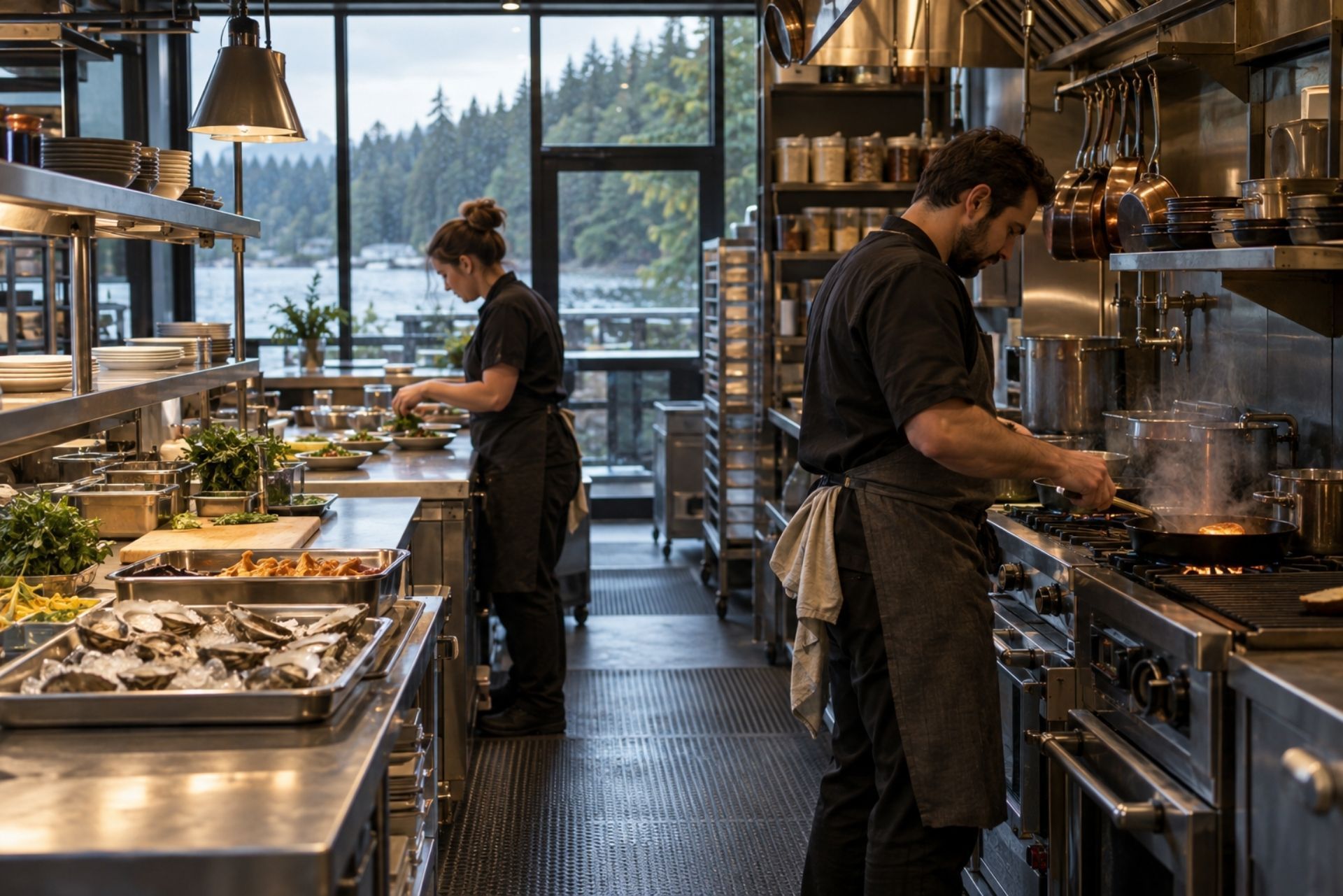
A fine dining restaurant isn't a diner with better lighting. Your assets include commercial-grade kitchen equipment worth hundreds of thousands of dollars, original artwork, custom millwork, wine collections, and specialty inventory that can't be replaced with a quick call to a food distributor.
Commercial Property and Fine Arts Coverage
Your commercial property policy should reflect replacement cost, not actual cash value, for your buildout and contents. Custom interiors, hand-blown glassware, and curated art pieces deserve scheduled coverage or a fine arts floater. Standard property policies often cap artwork and decorative items at surprisingly low sublimits, sometimes $5,000 or less, which won't come close to covering a commissioned mural or a collection of framed photography.
If you own your building, your policy needs to cover the structure itself. If you lease, coordinate with your landlord's policy to avoid gaps. Pay close attention to exclusions for flood and earthquake: both are relevant risks in parts of Washington, particularly along the coast and in the Puget Sound region. Separate flood and earthquake policies are typically required and worth the added premium.
Equipment Breakdown and Spoilage Protection
Kitchen equipment failures are becoming more expensive to resolve. The average equipment breakdown claim doubled between 2024 and 2025, and that upward trend has continued into late 2026. A failed combi oven or walk-in compressor doesn't just cost you the repair bill: it disrupts service, forces menu changes, and can spoil inventory.
Spoilage endorsements are particularly important for fine dining operators who stock high-value proteins, artisan cheeses, and rare ingredients. Many upscale restaurants now carry spoilage endorsements with limits exceeding $100,000 to guard against power grid instability and mechanical failure. If your walk-in holds $30,000 in wagyu, uni, and high-end charcuterie on any given night, a $10,000 spoilage sublimit is dangerously insufficient. Review your inventory peaks, especially around holidays and special events, and set limits accordingly.
Comparing Essential vs. Enhanced Coverage Tiers
Not every fine dining operation needs every possible endorsement from day one, but understanding the difference between a basic business owner's policy (BOP) and a custom package helps you make informed decisions about where to invest.
Comparison Chart: Standard BOP vs. Custom Fine Dining Packages
| Coverage Area | Standard BOP | Custom Fine Dining Package |
|---|---|---|
| General Liability | $1M/$2M typical | $1M/$2M with umbrella options to $5M+ |
| Property | Basic contents, low sublimits | Replacement cost, scheduled fine arts, higher sublimits |
| Liquor Liability | Often excluded or limited | Dedicated policy with $1M+ limits |
| Equipment Breakdown | May not be included | Included with expedited repair/replacement |
| Spoilage | $5K-$10K sublimit if included | $50K-$150K+ tailored to inventory value |
| Valet/Parking | Not included | Garagekeepers and hired/non-owned auto |
| EPLI | Not included | Included with third-party coverage |
| Business Income | Limited; short restoration period | Extended restoration, contingent BI available |
A standard BOP works for a casual eatery. It doesn't work for a restaurant where a single evening's wine pairings might exceed what some places spend on food in a week. The custom approach costs more upfront, but the gap between what you pay in premiums and what you'd pay out of pocket for an uncovered loss is where the real math lives.
Mitigating Risks Unique to Upscale Establishments
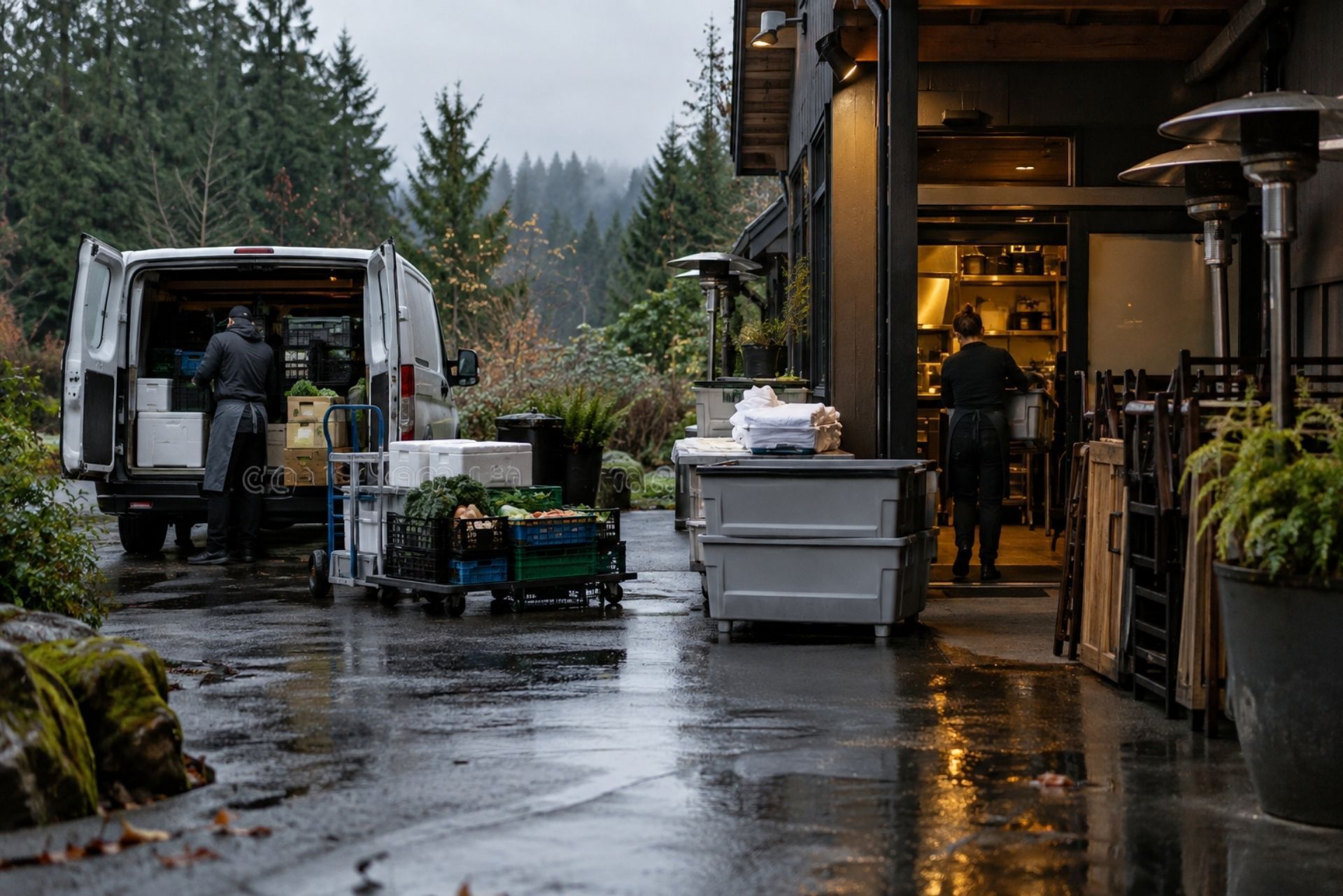
Fine dining creates exposures that casual restaurants simply don't face. Valet parking, sommelier-guided wine service, and a staff culture that demands precision all introduce liability scenarios that require specific coverage.
Valet Parking and Garagekeepers Liability
If your restaurant offers valet service, whether through in-house staff or a third-party company, you're exposed to vehicle damage and theft claims. Garagekeepers liability covers damage to vehicles in your care, custody, or control. Hired and non-owned auto liability covers accidents that occur while your valet driver is behind the wheel of a guest's car.
Even if you contract with a valet company, don't assume their insurance fully protects you. Review their certificate of insurance carefully and confirm you're listed as an additional insured. A guest whose $120,000 vehicle gets scratched or stolen isn't going to care about the contractual relationship between you and your valet vendor: they're going to sue everyone involved.
Employment Practices Liability Insurance (EPLI)
Fine dining restaurants typically employ larger staffs with complex hierarchies: executive chefs, sous chefs, sommeliers, front-of-house managers, servers, and support staff. That structure creates friction points where discrimination, harassment, wrongful termination, and wage-and-hour claims can arise.
EPLI covers defense costs and settlements for employment-related claims. In 2026, Washington's employment laws continue to be among the most employee-friendly in the country, with strong protections around paid sick leave, tip pooling regulations, and anti-discrimination statutes. A single wrongful termination claim can cost $75,000 to $200,000 or more to defend and settle, even if the claim lacks merit. Third-party EPLI coverage, which protects against claims made by customers alleging discrimination by your staff, is an important add-on for high-touch service environments.
Common Questions About Insuring a Restaurant in Washington
FAQ: Cost, Claims, and Local Regulations
How much does insurance cost for a fine dining restaurant in Washington? Premiums vary widely based on revenue, location, staff size, and coverage selections. A full-service fine dining operation in Seattle with $3M in annual revenue, a liquor program, and valet service might pay between $15,000 and $35,000 annually across all policies (https://adamscounty.iowa.gov/files/emergency_management/mitigation_plan_chapter_3_hazard_identification_and_risk_assessment_76409.pdf), though complex operations with $4 million in sales can exceed $40,000 (https://www.mosaicia.com/business-insurance/specialized-business-insurance/washington-restaurants-insurance).
Does my landlord's insurance cover my restaurant's contents? No. Your landlord's policy covers the building structure, not your equipment, inventory, furniture, or tenant improvements. You need your own commercial property policy for those assets.
What happens if I serve alcohol without proper liquor liability coverage? You're personally and financially exposed to dram shop claims. Washington's dram shop laws allow injured parties to sue the establishment that over-served an intoxicated person. Without coverage, defense costs and settlements come directly from your business.
Do I need separate flood or earthquake insurance? Yes. Standard commercial property policies exclude both perils. Given Washington's seismic activity and flood-prone areas, separate policies are strongly recommended, especially for restaurants near waterways or in older buildings.
How often should I review my policy limits? At least annually, and after any major change: a menu overhaul that increases inventory value, a buildout, adding valet service, or hiring significantly more staff. Seasonal inventory spikes around holidays also warrant a mid-term check.
Is business income coverage really necessary? A kitchen fire or major equipment failure could shut you down for weeks or months. Business income coverage replaces lost revenue and covers ongoing fixed expenses like rent, loan payments, and payroll during the restoration period. For a fine dining operation with high fixed costs, this coverage is essential.
Protecting a fine dining restaurant in Washington requires more than checking boxes on a generic policy application. Your coverage needs to reflect the actual value of your assets, the specific risks of your service model, and the regulatory environment you operate in.
Start by documenting your exposures in detail: total equipment value, peak inventory levels, annual revenue, payroll by job classification, and any services like valet parking that introduce additional liability. Then work with a broker or agent who specializes in hospitality, not a generalist who writes policies for dentists and dry cleaners. Ask specifically about spoilage limits, equipment breakdown, EPLI with third-party coverage, and business income with an extended restoration period.
The right insurance program for your restaurant won't be the cheapest option on the table. It'll be the one that keeps your doors open and your reputation intact when something goes wrong. Get quotes from at least three sources, compare the actual coverage terms rather than just the premium, and build a policy portfolio that's as carefully constructed as your menu.

About The Author:
Jackson Hering
I'm a fourth-generation insurance agent, having learned the business firsthand while working alongside my father. With years of experience passed down through my family, I take pride in combining that legacy knowledge with a modern, client-focused approach. I started my career at a small, family-owned agency and worked my way up, gaining a deep understanding of the industry from the ground up.
Contact Us
Coverage for Everyday Life
Personal Insurance That Works for You
We help individuals and families find coverage that keeps life moving—without overpaying or getting lost in fine print. From auto and home insurance to umbrella and life protection, our licensed team compares options across top-rated carriers to make sure you’re covered the right way, right now.
Auto Insurance
Drive with confidence and coverage that fits your needs.
Home Insurance
Coverage for fire, theft, liability, and more.
Renters Insurance
Affordable protection for your belongings and personal liability.

Boat Insurance
Coverage for watercraft damage, liability, and gear.
Life Insurance
Prepare for the future with term or whole life policies.
Umbrella Insurance
Extra liability protection for life’s bigger risks.
Protect Your Business Without the Guesswork
Business Insurance Built for Stability & Growth
Running a business comes with risk. We help reduce it. Our team builds custom coverage for your needs, including general liability, property, commercial auto, and cyber protection. We’re fast, responsive, and easy to reach—so your insurance is one less thing to worry about.
Industries We Serve
Tailored by Industry
We understand the risks unique to your business—and how to insure against them.

Contractors & Trades
We help contractors protect their tools, vehicles, job sites, and employees with comprehensive insurance solutions. Whether you’re a general contractor, electrician, plumber, or another trade, we provide the coverage you need to keep your projects moving forward safely.
Cannabis Industry
Mosaic specializes in insuring the unique risks of the cannabis industry, including growers, retailers, processors, and delivery services. We understand the compliance challenges you face and work with carriers who can protect every stage of your operation.


Lessor’s Risk (LRO)
If you own a building and lease space to commercial tenants, we help protect your property and liability as a landlord. Our policies safeguard your investment from damages, lawsuits, and other risks that come with leasing commercial real estate.

Frequently Asked Questions
Quick Answers. Trusted Support.
Insurance doesn’t have to be confusing. We’re here to make everything clear, helpful, and hassle-free.
What states is Mosaic Insurance licensed in?
Mosaic is licensed in more than 10 states, including Washington, Oregon, Arizona, California, Texas, Colorado, and more. Our team can help you whether you live locally in WA or operate across multiple state lines.
We’re especially well-equipped to help clients with multi-state businesses, real estate portfolios, or cannabis operations that need compliance-ready coverage in various jurisdictions.
Can I get quotes from multiple carriers through Mosaic?
Yes. As an independent agency, we partner with a wide range of top-rated insurance carriers. That means you’re not locked into just one company’s pricing or coverage limitations.
Our advisors compare quotes for you, break down the differences, and help you choose the plan that fits best—no pressure, just honest advice.
Does Mosaic offer cannabis insurance, and who qualifies?
Absolutely. Mosaic is one of the few agencies with deep experience in cannabis insurance. We offer coverage for dispensaries, cultivators, delivery services, manufacturers, and labs.
If you're in a licensed state and need coverage that meets regulatory requirements, we can help set you up with carriers who understand the cannabis industry’s unique risks.
What can I do through the client portal?
You can use our 24/7 client portal to request policy changes, submit certificates of insurance, and manage your billing. It’s easy to use and always available.
This helps speed up business tasks and gives you full access to your coverage—even outside of regular office hours.
What should I expect after requesting a quote?
Once you request a quote, our team will reach out to gather a few key details. From there, we shop coverage with multiple carriers and return with clear, personalized options.
We make it easy to compare policies, ask questions, and finalize your protection—usually in 24–48 hours.
Can Mosaic help me file a claim?
Yes. Whether it’s an auto accident, property damage, or business-related issue, we’re here to guide you through the claims process. Our team can explain your coverage, contact the carrier, and help get things moving quickly.
We’re your advocate—before, during, and after a claim. You don’t have to go it alone.
Tips, News & Insights
Explore Our Blog