Washington Auto Repair and Body Shop Workers' Compensation Insurance

or call us: 425-320-4280
Top 3 Recommended Policies

By: Jackson Hering
Licensed Personal Insurance Specialist
425-409-2497
Picture a Tuesday afternoon in your bay. A tech pulls a transmission off a jack stand, twists wrong, and drops to one knee. By Friday, you're fielding calls about medical bills, time-loss payments, and what this means for next year's premium. Workers' comp for Washington auto repair shops doesn't work like it does in most states, and the owners who understand the system keep more money in their pockets.
This guide walks through the Washington-specific rules, the class codes that decide your rates, the hazards that drive the most expensive claims, and the steps that keep a single injury from following you for three years. Whether you run a two-bay independent garage in Yakima or a 20-tech collision center in Tacoma, the mechanics of the system are the same. The difference is how well you manage them.
Washington State Workers' Comp Rules for Auto Repair Owners
Washington is one of the few monopolistic states. You can't buy workers' comp from a private carrier here. Coverage comes through the Department of Labor & Industries (L&I) State Fund unless you qualify to self-insure, which almost no independent shop does. That means no shopping around for a cheaper workers' comp quote. Your savings come from correct classification, accurate reporting, and claims control.
Rates keep climbing. L&I raised premiums by an average of 4.9% in 2026 and has proposed another 4.9% average increase for 2027. The agency explained that "the cost of providing workers' compensation coverage continues to go up as wages and medical costs increase." Public hearings on the 2027 proposal are scheduled for October 27 to 29, 2026, with final adoption expected by November 30.
Here's what that means for you:
- Every employee needs coverage. That includes part-time lot porters, detailers, and the family member who answers phones.
- Premiums are mostly based on hours worked, not payroll dollars, for most classifications. A $45/hour master tech and a $20/hour lube tech in the same class cost roughly the same per hour.
- Workers share the cost. Employers can deduct part of the medical aid portion from employee wages, but the employer covers the rest.
- Quarterly reports are mandatory. Late or missing reports trigger penalties and interest.
One thing to keep in mind: sole proprietors and LLC members aren't automatically covered. If you turn wrenches yourself, consider elective owner coverage. A herniated disc doesn't care whose name is on the business license.
Understanding L&I Class Codes for Mechanics and Painters
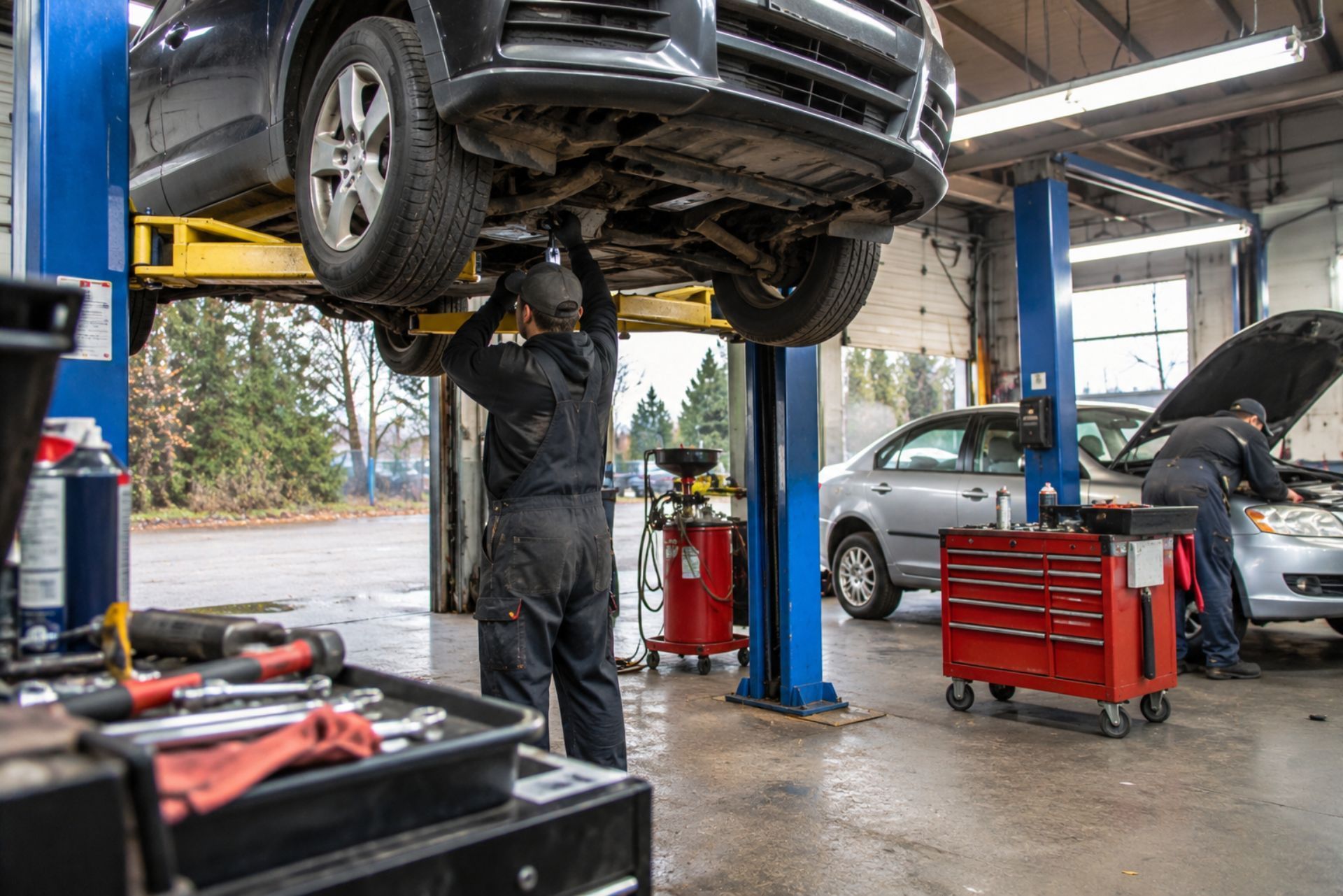
Your risk classification is the single biggest lever on your premium. L&I assigns each type of work a code with its own base rate, and shops often end up in the wrong one because the owner described the business loosely when opening the account. A shop that does mostly mechanical work with occasional bumper touch-ups has a different profile than a full collision center.
The catch is that L&I classifies by the business's primary operation, then allows separate codes for certain distinct work like clerical or outside sales. If your account was set up years ago and your service mix has changed, your classification may no longer fit. Always verify your current codes and rates directly with your L&I account manager or the rates lookup on the L&I site, since base rates change every January.
Code 3411: General Automobile Repair and Service
This classification typically covers shops doing mechanical repair: brakes, engines, transmissions, diagnostics, tires, alignments, and routine service. It usually includes the techs, shop helpers, and service writers who spend time in the bays. Quick-lube operations and tire shops may fall under related but separate codes, so don't assume.
Common mistakes we see here include lumping a dedicated office bookkeeper into the shop rate and failing to separately classify towing operations. A tow truck driver handling roadside recoveries carries different risk, and misreporting it can lead to back premiums after an audit.
Code 3412: Specialized Body and Paint Shops
Collision and refinishing work typically lands in a separate body and paint classification. These shops face chemical exposure from isocyanate-based clear coats, solvent vapors, sanding dust, and heavy panel handling. Frame straightening equipment adds crush and pinch hazards that mechanical shops rarely see.
If you run both mechanical and collision work, ask L&I whether your operations qualify for split classification. The answer depends on how physically and operationally separate those departments are. Shared employees who bounce between bays generally go to the higher-rated code.
Common Shop Hazards: From Lifting Injuries to Chemical Exposure
Most auto shop claims aren't dramatic. They're the slow-building strains and repetitive injuries that show up as a sore shoulder in March and become surgery by June. Knowing where claims come from tells you where to spend your safety dollars.
The claim types that hit repair shops hardest:
- Back and shoulder strains from lifting tires, batteries, transmissions, and cylinder heads.
- Hand lacerations and crush injuries from sharp sheet metal, slipping wrenches, and pinch points on lifts.
- Eye injuries from grinding debris, brake dust, and fluid splash.
- Respiratory issues among painters exposed to isocyanates and solvents without fit-tested respirators.
- Slip-and-fall injuries on oil, coolant, and winter slush tracked in from the lot, a real problem in Spokane and mountain-pass towns.
- Burns from exhaust systems, hot coolant, and welding.
Wildfire smoke adds a Washington-specific wrinkle. During bad smoke seasons, techs working with open bay doors breathe degraded air for hours, and L&I has wildfire smoke rules that require employers to monitor air quality and provide protection at certain thresholds. Keep N95s stocked and know your response plan before August.
Ergonomics and Back Safety Near the Lifts
Washington is putting new attention on this area. Under ESSB 5217, L&I began adopting new rules effective July 1, 2026, to prevent work-related musculoskeletal disorders in high-risk industries. Repair shops with heavy lifting and awkward overhead work should watch how these rules apply to them.
Practical fixes that reduce strain claims:
- Set lift heights so techs work between waist and shoulder level, not overhead for an hour.
- Buy transmission jacks, tire lifts, and creeper seats, then make using them mandatory.
- Require two-person lifts for anything over a set weight your team agrees on.
- Rotate techs between heavy jobs and diagnostic work during long days.
- Document every training session with dates and signatures.
That last step matters because documentation is your best defense when L&I asks what you did to prevent an injury.
Since you can't leave the State Fund, your real choice is whether to join a retrospective rating (Retro) program. Retro is an optional L&I program that refunds part of your premium if your group's claims come in lower than expected. It can also cost you an additional assessment if claims run high.
Most small shops join through a group, often sponsored by a trade association. Groups pool safety resources and claims management help, and many provide claim consultants who push for faster return-to-work. Larger shops with steady payroll sometimes enroll individually.
| Feature | Standard State Fund | Retro Program |
|---|---|---|
| Premium basis | Base rate × experience factor | Same, plus refund or assessment |
| Upside | Predictable cost | Potential refund after review |
| Downside | No reward beyond experience factor | Possible extra charge if claims run high |
| Claims support | L&I claim manager | Often adds a dedicated group consultant |
| Best fit | Very small shops, new businesses | Shops committed to safety and RTW |
Retro refunds are calculated over several years after the coverage period, so you won't see money right away. If your cash flow is tight, factor that delay in. On the flip side, a well-run group can return meaningful money to shops that keep claims short.
Coverage Comparison: Workers' Comp vs. General Liability
| Scenario | Workers' Comp | General Liability |
|---|---|---|
| Tech cuts hand on sheet metal | Covered | Not covered |
| Customer trips over air hose in lobby | Not covered | Covered |
| Painter develops respiratory condition | Covered | Not covered |
| Vendor's driver injured on your lot | Not covered (their employer's comp) | May be covered |
| Customer's car damaged on your lift | Not covered | Needs garagekeepers coverage |
That last row trips up a lot of shops. Damage to customer vehicles in your care requires garagekeepers coverage, which sits outside standard general liability. Ask your agent about garage liability policies, which bundle these exposures for auto businesses.
Washington also has a gap many owners miss: stop gap coverage. Because L&I doesn't include employer's liability, you need a separate stop gap endorsement to defend against lawsuits alleging deliberate intent to injure. It's usually added to your general liability policy, and skipping it leaves you exposed to a lawsuit no other policy will touch. Also note that new Washington regulations effective October 18, 2026, require insurers to provide more detailed explanations for claim denials and valuation adjustments on private policies, which helps when a garagekeepers claim gets disputed.
How to Prepare for a Washington L&I Payroll Audit
L&I audits employers to confirm hours are reported in the right classifications. An audit can result in a refund, but more often it uncovers underreported hours and leads to back premiums, interest, and penalties. Preparation turns a stressful week into a routine review.
Before the auditor arrives:
- Pull at least three years of quarterly reports and payroll records.
- Gather timecards that show hours by employee.
- Collect 1099s for anyone you paid as a contractor.
- Prepare job descriptions for every role.
- Confirm certificates of coverage or L&I account numbers for subcontractors.
Subcontractors are a big audit trap. If you send transmissions to a rebuilder working out of his garage or hire a mobile detailer, L&I may treat them as your workers unless they meet Washington's independent contractor tests and carry their own coverage. Unpaid premiums from a subcontractor can land on your account.
Tracking Hours for Mechanics vs. Clerical Staff
Clerical office workers usually carry a much lower rate than shop techs. You can only claim that lower rate if the employee works entirely in a separate office area and doesn't perform shop duties.
A service writer who walks customers through the bay, moves cars, or grabs parts usually doesn't qualify. If someone splits time, L&I typically expects you to keep accurate records showing hours in each role, and some classifications don't permit splitting at all. When in doubt, ask L&I in writing before you report. Shops that guess wrong pay back premiums when the auditor reviews the timecards.
Managing a Claim Without Spiking Your Experience Factor
Your experience factor compares your claims costs to similar shops. A factor below 1.0 lowers your premium. Above 1.0 raises it, and claims typically affect your rating for three years. One mishandled back injury can cost more in future premium than the claim itself.
The biggest driver of claim cost is time-loss: the wage replacement paid while an injured worker stays home. Medical costs matter, but long time-loss claims do the real damage.
When an injury happens:
- Get the worker appropriate medical care right away.
- Document the scene with photos, witness names, and the time.
- Report the claim promptly. Delays raise costs and invite disputes.
- Stay in contact with the worker and their provider weekly.
- Offer modified work as soon as the provider allows it.
Don't discourage employees from filing. It's illegal and it backfires, because unreported injuries usually get worse. A shop culture where techs report a tweaked shoulder early catches small problems before they become surgeries.
Implementing a Light-Duty Return-to-Work Program
L&I's Stay at Work program can reimburse part of the wages you pay an injured worker doing light-duty tasks, plus some training and tool costs. That reimbursement makes modified work cheaper than letting time-loss run. Check the current terms with L&I.
Light-duty options in a repair shop:
- Running diagnostics and scan tool work
- Writing estimates and calling parts suppliers
- Inventory counts and shop organization
- Quality control checks and test drives
- Training newer techs
Write job descriptions for these roles now, before you need them. Providers approve modified duty faster when they can read exactly what the job requires.
Common Questions About Shop Insurance in Washington
Can I buy workers' comp from a private insurer in Washington? No. Washington requires coverage through the L&I State Fund unless your business qualifies to self-insure. Private carriers only sell stop gap coverage.
Do I need coverage if I only have one part-time employee? Yes. Any employee, including part-time and seasonal workers, must be covered through L&I.
Why did my rate go up when we had no claims? L&I adjusts base rates every year, and the average rose 4.9% for 2026. Your experience factor can offset some of that if your claims history stays clean.
Is my apprentice mechanic covered? Yes. Apprentices and trainees are employees and need to be reported in the correct classification.
What happens if I don't carry workers' comp? You can face penalties and be held responsible for the full cost of any injury claim. L&I can also place liens on your business.
Does stop gap coverage come with L&I? No. You buy it separately, usually as an endorsement on your general liability or garage policy.
Protecting Your Team and Your Bottom Line
Workers' comp in Washington rewards shops that pay attention. You can't shop rates, so your control comes from correct classification, clean hour tracking, strong ergonomics, and fast return-to-work. With L&I proposing another average increase for 2027, every claim you shorten and every misclassified hour you fix directly protects your margins.
Your next steps are simple. Review your L&I classifications this month, confirm your clerical staff truly qualify for the lower rate, and write light-duty job descriptions before the next injury. Then sit down with an independent agent who knows auto businesses to check your stop gap, garagekeepers, and general liability coverage. Comparing quotes from regional and national markets through an independent agent gives you the clearest view of where your gaps are.
Your techs are your shop's most valuable equipment. Treat their safety like you treat your lift inspections: scheduled, documented, and never skipped.

About The Author:
Jackson Hering
I'm a fourth-generation insurance agent, having learned the business firsthand while working alongside my father. With years of experience passed down through my family, I take pride in combining that legacy knowledge with a modern, client-focused approach. I started my career at a small, family-owned agency and worked my way up, gaining a deep understanding of the industry from the ground up.
Contact Us
Coverage for Everyday Life
Personal Insurance That Works for You
We help individuals and families find coverage that keeps life moving—without overpaying or getting lost in fine print. From auto and home insurance to umbrella and life protection, our licensed team compares options across top-rated carriers to make sure you’re covered the right way, right now.
Auto Insurance
Drive with confidence and coverage that fits your needs.
Home Insurance
Coverage for fire, theft, liability, and more.
Renters Insurance
Affordable protection for your belongings and personal liability.

Boat Insurance
Coverage for watercraft damage, liability, and gear.
Life Insurance
Prepare for the future with term or whole life policies.
Umbrella Insurance
Extra liability protection for life’s bigger risks.
Protect Your Business Without the Guesswork
Business Insurance Built for Stability & Growth
Running a business comes with risk. We help reduce it. Our team builds custom coverage for your needs, including general liability, property, commercial auto, and cyber protection. We’re fast, responsive, and easy to reach—so your insurance is one less thing to worry about.
Industries We Serve
Tailored by Industry
We understand the risks unique to your business—and how to insure against them.
Contractors & Trades
We help contractors protect their tools, vehicles, job sites, and employees with comprehensive insurance solutions. Whether you’re a general contractor, electrician, plumber, or another trade, we provide the coverage you need to keep your projects moving forward safely.
Cannabis Industry
Mosaic specializes in insuring the unique risks of the cannabis industry, including growers, retailers, processors, and delivery services. We understand the compliance challenges you face and work with carriers who can protect every stage of your operation.


Lessor’s Risk (LRO)
If you own a building and lease space to commercial tenants, we help protect your property and liability as a landlord. Our policies safeguard your investment from damages, lawsuits, and other risks that come with leasing commercial real estate.

Frequently Asked Questions
Quick Answers. Trusted Support.
Insurance doesn’t have to be confusing. We’re here to make everything clear, helpful, and hassle-free.
What states is Mosaic Insurance licensed in?
Mosaic is licensed in more than 10 states, including Washington, Oregon, Arizona, California, Texas, Colorado, and more. Our team can help you whether you live locally in WA or operate across multiple state lines.
We’re especially well-equipped to help clients with multi-state businesses, real estate portfolios, or cannabis operations that need compliance-ready coverage in various jurisdictions.
Can I get quotes from multiple carriers through Mosaic?
Yes. As an independent agency, we partner with a wide range of top-rated insurance carriers. That means you’re not locked into just one company’s pricing or coverage limitations.
Our advisors compare quotes for you, break down the differences, and help you choose the plan that fits best—no pressure, just honest advice.
Does Mosaic offer cannabis insurance, and who qualifies?
Absolutely. Mosaic is one of the few agencies with deep experience in cannabis insurance. We offer coverage for dispensaries, cultivators, delivery services, manufacturers, and labs.
If you're in a licensed state and need coverage that meets regulatory requirements, we can help set you up with carriers who understand the cannabis industry’s unique risks.
What can I do through the client portal?
You can use our 24/7 client portal to request policy changes, submit certificates of insurance, and manage your billing. It’s easy to use and always available.
This helps speed up business tasks and gives you full access to your coverage—even outside of regular office hours.
What should I expect after requesting a quote?
Once you request a quote, our team will reach out to gather a few key details. From there, we shop coverage with multiple carriers and return with clear, personalized options.
We make it easy to compare policies, ask questions, and finalize your protection—usually in 24–48 hours.
Can Mosaic help me file a claim?
Yes. Whether it’s an auto accident, property damage, or business-related issue, we’re here to guide you through the claims process. Our team can explain your coverage, contact the carrier, and help get things moving quickly.
We’re your advocate—before, during, and after a claim. You don’t have to go it alone.
Tips, News & Insights
Explore Our Blog